
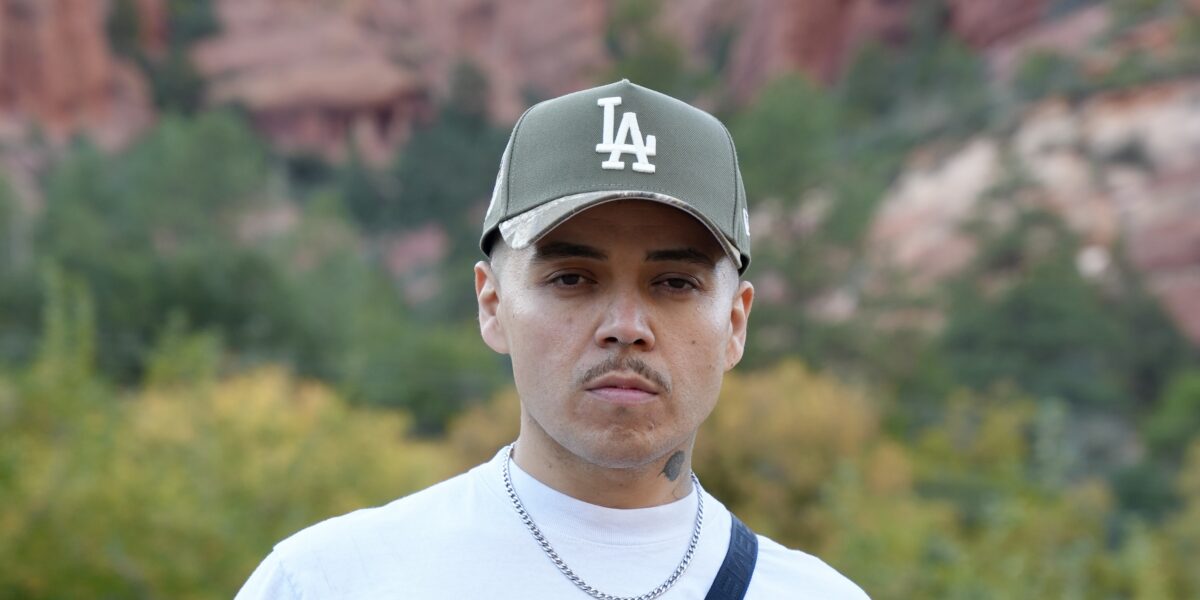
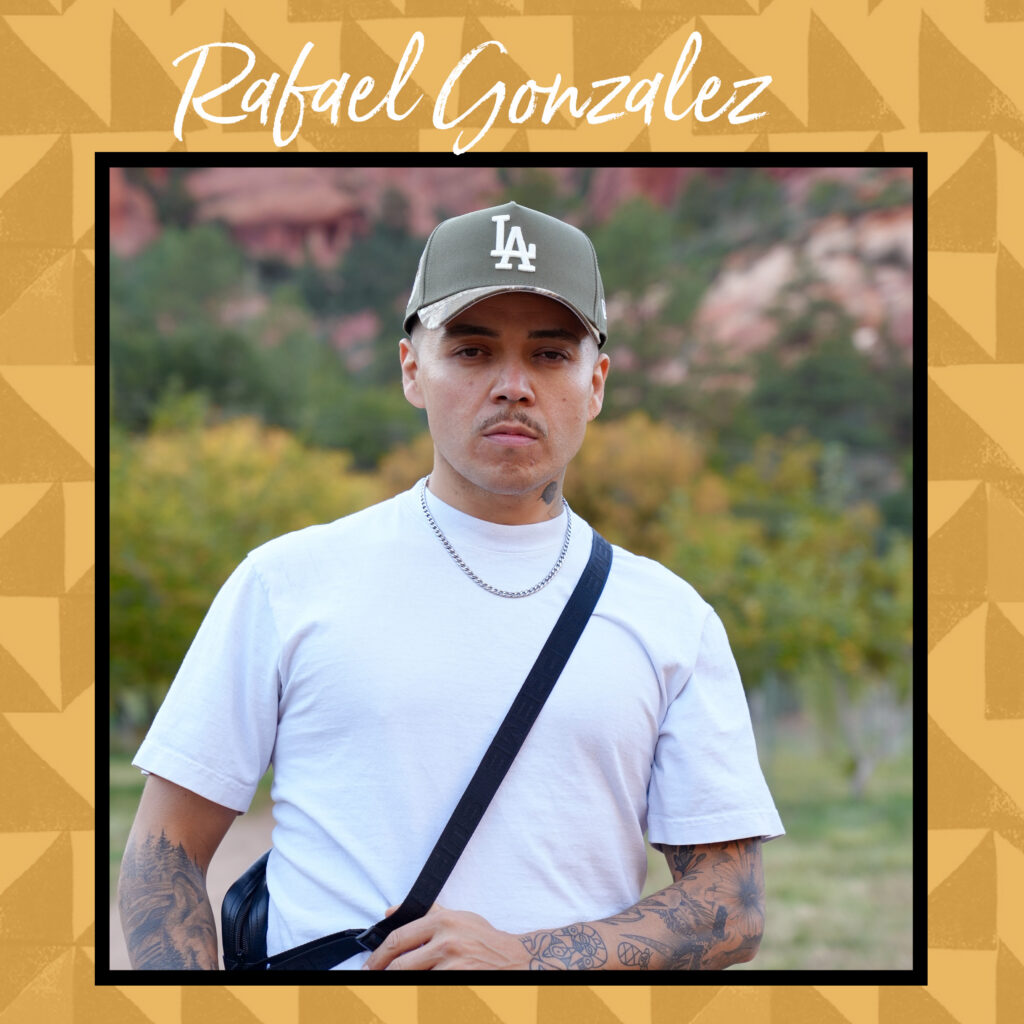
We are very excited to speak with Rafael Gonzalez, aka, Tufawon. He is a Mdewakanton Dakota and Boricua (Puerto Rican). He’s a rapper, singer-songwriter, and producer who calls South Minneapolis home. In addition to his music making, he’s an educator. He teaches youth music production, songwriting, and recording through his music production program “.WAVWARRIOR”.
Rafael joins us from Aguada, Puerto Rico, the mountainous home of his Boricua family. Puerto Rico and its musical heritage would eventually play a large role in the sounds he brought to the Minneapolis scene that gave rise to him as an artist. He talks about the support of the Minneapolis rap community when he was starting out, and how a group of Lakota and Dakota water protectors became his music mentors.
He reveals his biggest fear as a performer, why he believes in the next generation of creators and why he’ll never step away from music making. He also shares clips of two new tracks from his EP Gradient.
—–
Hosts / Producers: Leah Lemm, Cole Premo
Editor: Britt Aamodt
Editorial support: Emily Krumberger
Mixing & mastering: Chris Harwood
Image: Rafael Gonzalez [photo credit: Rafael Gonzalez]
Music: “Colorful” from EP Gradient (2026), written and produced by Tufawon, courtesy of Rafael Gonzalez/Tufawon. [00:00:28]
“Wandering” from EP Gradient (2026), written and produced by Tufawon, courtesy of Rafael Gonzalez/Tufawon. [00:01:00]
Native Lights is produced by Minnesota Native News and AMPERS with support from the Minnesota Arts and Cultural Heritage Fund.
—–
For the latest episode drops and updates, follow us on social media.
Never miss a beat. Sign up for our email list to receive news, updates and content releases from AMPERS. ampers.org/about-ampers/staytuned/
This show is made possible by community support. Due to cuts in federal funding, the community radio you love is at risk. Your support is needed now more than ever. Donate now to power the community programs you love: ampers.org/fund
TRANSCRIPT
[Music: Native Lights Theme]
RAFAEL GONZALEZ: I’m doing urban music. I wanted my cultures to be represented, and so I’m like, okay, I love reggaeton music, dancehall. I love Caribbean music. I was afraid for a while, like I was scared. I don’t know why. You know, there’s something really vulnerable about about singing, rapping too, but especially singing, especially singing and being a rapper, there was a stigma around it.
LEAH LEMM: Boozhoo, hello, welcome to Native Lights, where Indigenous voices shine. I’m your host Leah Lemm.
COLE PREMO: And I’m your other host, Cole Premo. Miigwech for joining us today. Native Lights is a podcast and radio show, but oh my goodness, it’s much more than that. At its core, it’s a place for Native folks to tell their stories. Each and every week, we have captivating conversations with great guests from a whole lot of different backgrounds. We’re talking musicians, artists, community leaders, educators, language warriors-you name it. They have a wonderful mix of passions, and we talk to them about their gifts and how they share the gifts with their community, and it centers around the big point of purpose in our lives, which for us is you know amplifying Native voices. It’s one of our big ones.
LEAH LEMM: Oh, yeah.
COLE PREMO: Let’s go. How you doing, Leah?
LEAH LEMM: I am doing well. Just hanging in there. We got some storms today up here. I’ll try not to be a weather person here. I have no right to be, but yeah, it’s been great popping around town, talking to folks as usual. But yeah, how are you?
COLE PREMO: Oh, it’s muggy out there.
LEAH LEMM: Huh?
COLE PREMO: For the people listening in the future, in the way future, it is a very extreme heat type of day with high humidity, and I’m of course adding to the weather discussion. But it’s hard to ignore on a day like today. But you know, otherwise, doing well, trying to get as much sleep as possible, which is not that much. But it’s a you know, it’s okay. Not not complaining.
LEAH LEMM: Yeah, well, a day like today kind of reminds me how different our weather up north can be from your weather in the Cities. Because it was just like rain, rain, rain. I was wearing a jacket, and you guys are like sweating.
COLE PREMO: A jacket. Wow.
LEAH LEMM: Ah, rain.
COLE PREMO: Oh, yeah, yeah, yeah. Okay. Well, that makes sense. That makes sense. But you know.
LEAH LEMM: Yeah, I guess we are kind of far. That’s all right.
COLE PREMO: Let’s get into it. You know, we love we love talking to musicians. You know.
LEAH LEMM: Oh, yeah.
COLE PREMO: We got one today. We’re very excited to speak with Rafael Gonzalez, aka Tufawon. He is a Mdewakanton Dakota and Boricua, also known as Puerto Rican. He’s a rapper, singer-songwriter, and producer who calls South Minneapolis home. In addition to his music making, he’s also an educator. He teaches youth music production, songwriting, and recording through his music production program WAVWARRIOR, wave like a wav file, you know.
LEAH LEMM: That sounds like a dream. Really cool program to do.
COLE PREMO: Yeah, and so we’ll talk to him about all of that and more. Here he is. Boozhoo, Tufawon.
RAFAEL GONZALEZ: Hello.
COLE PREMO: All right. Could you please start by introducing yourself and you know telling us where you’re where you’re joining us from?
RAFAEL GONZALEZ: Hello, my relatives. My name is Tufawon, and I’m Mdewakanton Dakota and Boricua from the south side of Minneapolis, and I’m coming all the way live from Puerto Rica. I’m in Puerto Rico right now.
COLE PREMO: Awesome, Leah. Do you want to just get to it then?
LEAH LEMM: No. Yeah. I mean, I was just going to ask, like, what’s up? What are you doing in Puerto Rico?
RAFAEL GONZALEZ: Well, I’ve been doing a lot of touring and a lot of work, protest, museum. Combination of both. And this year has been incredibly busy, especially you know being from the Twin Cities. And then I was touring Europe doing divestment work, and I wanted to go to Puerto Rico to just immerse myself in our culture, and you know, gain some fluency and spend time with family because I have a ton of family here. And that trip got pushed back. I was initially supposed to be going in the in the wintertime, and it got pushed back. So here I am enjoying this month-long recharge and yeah, just immersing myself again, immersing myself in the culture, being with family, working while I’m here too. So it’s a it’s kind of a combination of a retreat, but also you know getting work done and plugging it away on my laptop and. And working on you know my bookings, and I have my recording studio here, so I’m also staying busy while I’m here too. So yeah.
LEAH LEMM: Wonderful. Where whereabouts in Puerto Rico did you say you are?
RAFAEL GONZALEZ: I’m in Aguada, which is on the west coast. Yeah, all the almost all the way west. Yeah, my family is from the mountains, and I come from a giant family that has been in these same mountains for generations and generations. And on our Indigenous side, I mean, we go way, way back. So yeah.
LEAH LEMM: Got it.
RAFAEL GONZALEZ: It feels good to be on my other ancestral homelands.
LEAH LEMM: Well, my family and I we went to Puerto Rico in February, but we were staying in Old San Juan.
RAFAEL GONZALEZ: Okay.
LEAH LEMM: And so I I just follow a little bit of what’s going on in Puerto Rico, and I saw there they had a some water issues recently, but that might have been more towards San Juan area.
RAFAEL GONZALEZ: It is in the San Juan metro area, and I I took a day trip out there without even knowing what was going on, and I I cruised out there and I I was getting a camera lens and I I found a really cool lens on Marketplace and I’m like oh it’s in San Juan so I gotta I gotta go out there, and so I went, and I was like, you know what? Let me make a little stop in Old San Juan, and yeah, just just go hang out and get a coffee and just walk around this old city. And I went, and when I was at the coffee shop, I was like, hey, where’s the bathroom? And they’re like, oh yeah, sorry, our bathroom is out of order. We don’t have any water in this whole area, and I was like, oh my god, I didn’t even realize. Come to find out, there’s like this terrible water crisis happening, but it’s mainly in the San Juan metro area. Like, I’m fine, and my my family members and everybody on this side of the island, we have water.
LEAH LEMM: Great, thanks. And I mean, one of the questions we like to ask when we get started is, how are you and the family doing?
RAFAEL GONZALEZ: Oh, everyone’s doing good. I mean, my my family is they’re doing doing well high up in in the mountains. They live in Aguada. They live in the highest mountainous peaks way up there. I’ve been spending a lot of time, and they seem to be doing well. Yeah, you know, I mean, it’s a struggle just because the economy is really tough out here, and the United States colonialism and imperial power kind of has a chokehold on the island. So, for any common Boricua, you know it’s very common for it to be a bit of a struggle out here. But my family, you know, they navigate it really well, and they know how to. They’re really resilient. The older members of my family come from a generation where they experience some really, really extreme poverty, you know, and they were able to work their their way out of that, buy houses and buy land, and yeah, most of them are are doing pretty good right now. So feels good to just hold space and be with them.
LEAH LEMM: Great. Well, I hope you’re having some good time and eating some good food and some good mofongo.
RAFAEL GONZALEZ: Oh my god, the food is amazing, and I’ve had mofongo already several times.
COLE PREMO: Could you describe mofongo for somebody who may have not had it?
RAFAEL GONZALEZ: Mofongo is a traditional Puerto Rican dish, and it comes in different forms in different countries. But for us, it’s a main dish, and it is stuffed mashed plantain dish. You pick your protein. You know, a lot of people will put like like a chicken over it, or seafood. You know, shrimp or pork or whatever. The meat is typically made in like a in like a caldo or a broth of some sort. It’s almost like a gravy that’s just the mofonfo is just smothered in it. It’s incredibly good.
COLE PREMO: Maybe I shouldn’t have asked that when I’m a bit hungry.
RAFAEL GONZALEZ: Oh, triggered some cravings here.
COLE PREMO: There you go.
LEAH LEMM: You’re listening to Native Lights, where Indigenous voices shine. Native Lights is produced by Minnesota Native News and AMPERS, with support from the Minnesota Arts and Cultural Heritage Fund. Today, we’re speaking with Rafael Gonzalez, known as Tufawon, a Dakota and Boricua hip hop artist, producer, and music educator from Suth Minneapolis.
COLE PREMO: Well, you know, let’s dive into it. Can you talk to us about your music? Start out with Tufawon. What does that mean for the music you create, and what’s the meaning behind the name there?
RAFAEL GONZALEZ: Yeah, totally. So Tufawon really means like two for one, and I’m coming from a mixed heritage. You know, I’m Dakota. I’m Boricua, and so that’s that. That’s kind of where that comes from. It also represents the Twin Cities because I’m a Twin Cities person from the south side of Minneapolis. So there’s that two for one, but it also just means more than one. We’re not linear beings. We all come from so many different Intersections, cultures, as Native people, as Latinx people, as whoever we are, we’re not we’re not a monolith. You know, there’s so so many levels and layers to who we are, and that is also reflected in the music. And so the music, I don’t really take on one genre, although hip hop has always been like the foundation of it because that’s where I come from, doing hip hop music for so long. But I also do reggaeton and dancehall and R&B and trap soul and a lot of different genres, and I’m also a vocalist and a producer. So it’s just-it really just means more than more than one.
[Music excerpt: TUFAWON singing “Colorful”]
COLE PREMO: You do have a wide range of inspirations. It seems like in one song you’re you know rapping, another you’re singing, mixing it up too. Could you talk about where your inspiration comes from? What sparked that interest in music for you?
RAFAEL GONZALEZ: I started getting into music, I’ve always had an interest since I was a little little kid, and I would watch the music videos on MTV, and I would be glued to the screen, and I’m like, “Oh my God, I love Easy E, and I love Whitney Houston, and I love all these different amazing artists from like the golden era.” I always wanted to get into music, however I could, because I had this curiosity, and so when I was in elementary, when I was in fourth grade, I played the trumpet and the clarinet. I was also in choir. I sang in choir, and so a part of my music background is formal. You know, I got had gotten some classical training early in life, but I wanted to go beyond that, and I I always had this this interest and pull towards hip hop music and how the production was made. You know, I would I would listen to Tupac, and I’m like, how did they get the beats? How did they do that? You know how did they get their vocals on the beats? How did they get the sounds in there? Where do these drum sounds come from? I don’t get it. I don’t understand it. But I’m fascinated. As a little kid in high school, that kind of pulled me into this like lifelong journey and exploration. Well, I don’t want to say exploration, but like this lifelong investigation of music and especially hip hop. And then I started learning. I had my mentors in Minneapolis. There was a huge scene of beat makers in Minneapolis that kind of took me under their wing, like members of like Fam Feud and Big Quarters, just different producers who were already doing it, artists that already paved the way for Minneapolis hip hop and already kind of built an infrastructure around it, pulled me in and took me under their wing and showed me how to do it. For me, that was in the earlier phases. Hip hop was was it. I wanted to write like Nas and and the Wu Tang Clan, Mos Def, and all these amazing artists. Yeah, so it was very much lyricism driven in the beginning, especially it was all about bars. It was going to open mics and freestyling, and all of that. And then eventually, as I continued to progress and grow, you know, I wanted to incorporate the singing in there. And then, like I would say, about 20, maybe 2019, during COVID, I started getting into the melodic rap and sort of blending melody into it. And then in 2022, when I released my project Until the Sun Comes Up, I started doing songs where I was, you know, I’m full on singing. I wanted my cultures to be represented, right? I’m doing urban music. I wanted my cultures to be represented, and so I’m like, okay, I love reggaeton music. You know, I love I love dancehall. I love Caribbean music. Why not do it? And I was like, you know what? I was afraid for a while. Like I was scared. I don’t know why. You know, there’s something really vulnerable about about singing, rapping too, but especially singing, especially singing and being a rapper. There was a stigma around it, and so my cultures are a huge inspiration. Yeah, just the singers that I grew up listening to.
LEAH LEMM: Tufawon, I was listening to another podcast that you were on, and I heard you had some pretty solid inspiration from youth at Standing Rock.
RAFAEL GONZALEZ: Yeah.
LEAH LEMM: Some 10 years ago or so. Well, I guess it’s been 10 years since the conflict over at Standing Rock started. It was progressing over the summer. Can you speak to that?
RAFAEL GONZALEZ: I went out and fought the pipeline, and as a Dakota person, I felt a calling. You know, there was a spiritual calling for us to come in and protect the water, and so we did. And I just so happened to fit in with a group of water protectors who were coincidentally also mostly all rappers and singers. After we got pushed off the land and we lost that fight, we were like, “Why don’t we just tour and start touring?” And that’s what kind of pulled me into the whole like world of touring as an artist, you know, because I had been local, very local up until then. Started really getting into ceremony songs and traditional songs. The people that I that I roll with, people like Nataanii Means and Anton X, especially Anton. I mean, he taught me how to sing like traditional Lakota Dakota songs because he’s a traditional singer and a rapper. What the Standing Rock and NoDAPL movement really did was it helped me learn so much about my culture and our ways as Dakota people, and I’ve been able to take these principles that I’ve been learning and not only live by them but really incorporate them into the music. That’s a huge takeaway from that experience that I still walk with now.
COLE PREMO: A theme that I see in your music is using music to heal. One of your songs touches on depression, how you found a way through it.
RAFAEL GONZALEZ: Yeah, totally. I mean, whether I’m teaching or doing this for myself, because at its foundation, you know, music, I do this for my own enjoyment, right? You know, it starts off just in my studio, and I’m just toying around with things, and I I make music, and then something comes out, and I think music, especially when it comes to writing, it has a way of allowing myself. It’s like journaling. You’re writing your thoughts down, and it allows you to process your emotions in a really healthy and creative way. And so, one of the songs, and I think I know which song you’re referring to, is called “Wandering.” And this particular song was, you know, I was speaking to my time of feeling depressed and feeling like I was lost. The music helped pull me out of this dark place, but also ceremony and family. It also speaks to me finding ceremony and what you know what it means to walk this way. What it means to learn what our spirituality really means, and how like it was taken away from us. And I have been as a city Native in a lot of ways isolated from that. That song really talks about and speaks to finding ceremony again, and using music, ceremony, friends, and family as an art as a way to heal and lift me out of that, as well as going to see a therapist too. I mean that helps.
[Music excerpt: TUFAWON singing “WANDERING”: Mighta went down, mighta dipped down, maybe didn’t make a sound. Mighta hit the bottom, maybe fell to the ground. I mighta left my spirit somewhere in the clouds, somewhere in the clouds, and I don’t know how because I wanna run. Might catch a flight, might dip out of sight. I don’t wanna be here ’cause I wanna run. Might go to the place that’ll give me some peace. I wanna see it. Wanna run when I feel a hell of love and maybe wanna lose control ’cause I wanna run and I should probably call my soul back home…]
COLE PREMO: You’re listening to Native Lights, where Indigenous voices shine. Native Lights is produced by Minnesota Native News and AMPERS, with support from the Minnesota Arts and Cultural Heritage Fund. Today we’re speaking with Rafael Gonzalez, also known as Tufuwon, a Dakota and Boricua hip hop artist, producer, and music educator who is from Minneapolis. So you mentioned you had mentors, and then now you’ve kind of turned that around, and now you’re educating youth on music production with your .WAVWARRIOR program. Is this a way you know giving back of maybe something that you would have liked to have when you were younger?
RAFAEL GONZALEZ: Yeah, I mean, I had similar programming, right, in a very informal way, you know, my .WAVWARRIOR was Brandon Bagaason from Big Quarters, right? Who taught me how to use my MPC 2000 XL and Medium Zach and King Karnov and Fan Feud and Yo the Movement. So I did have versions of this, right? But .WAVWARRIOR is is my own version of what that is, and I feel like because I came from a place where I had mentors, even as informal as it was, just like in bedroom studios and basement studios and whatnot. I feel like I would be doing a disservice to my community if I didn’t pass that on to the next generation because I had my old heads who did the same thing too and passed that on to me. And so I find it really important to do the same thing. But also like I tried this program out I founded it in December of 2024. And I had also been working with prior to that with an artist collective called All Season, and the founder is Anton X, and we had been already doing music programming. So I knew that I was actually pretty good at this, right? Like making a song with the youth, and then we would do a music video. Things change and shift, and I still work with All Season, but I wanted to do something on my own as well. So I started this program, and I started teaching up in Red Lake at the charter school. Essentially, the .WAVWARRIOR program. It’s a music curriculum that I designed, where I travel to different Indigenous communities across Turtle Island, and I teach audio production, songwriting, and recording. I bring my mobile recording studio with me, and I make full songs from start to finish with Indigenous youth. Not everybody is able to do to do this, right? I just know that I have a I have this talent where I can work with the group of anywhere between one to 15 kids, ages I don’t know grades 14 into like college level, and like turn it into a whole experience, and by the end of the program, the outcome is a fully produced song, mixed and mastered. At this point, I’ve visited so many communities that I have like albums worth of songs at this point, and they’re so beautiful. Like you got to hear it. If you go to my website, if you go to two for one.com/youthwork, you can listen to a handful of those songs that I’ve created with these kids, and they are amazing. It’s not only about creating the songs, right? But it’s the memories and the experience, and showing these young people that you know music can be a pathway for them. Because I’ve been able to travel the world using music, and I’m trying to tell them, like, hey, you know, you can do the same thing too. I’m a Native person, and you’re a Native person, and all you gotta do is follow these steps. I mean, there’s a lot more to it, but it’s like my pride and joy right now.
COLE PREMO: What other projects are you working on?
RAFAEL GONZALEZ: I don’t have anything like an album, right, that I’m working on because I did release a an EP at the beginning of the year called Gradient. So I’m kind of still promoting that and putting out visual. More like social media content style mini music videos for those songs, and I did this EP in partnership with the Duluth Art Institute, and I was commissioned by the American Composers Forum to do this EP. It’s called Gradient, and it is essentially the soundtrack to a Native Art exhibition that was going on at the Duluth Art Institute, showcasing the works of Carl Gawboy and Wendy Savage, and their work is incredible. And I had the honor of being able to be the sonic sound of the exhibition.
LEAH LEMM: Well, as we wind down our conversation together, can you talk a little bit about what motivates you to continue doing your work?
RAFAEL GONZALEZ: I feel good doing it. It’s just so natural. Like when I’m in the studio making music, it pulls me in. That hasn’t left. I think that’s the most special thing about it. Is when I’m in my recording studio space, I can make a beat and come up with the groove, and suddenly I’m in a flow state, and that flow state goes back to that healing that you’re talking about, Cole. Right? I’m in this flow state, and it feels so nourishing and so sacred. I can channel my ancestors through the music, through the words, through the singing styles, through the the beats, rhythmically, all of that, right? This is all ancestral, right? And so that keeps me going. It’s such a sacred space. I don’t even know if I’ll ever let that go. So that’s one thing that’s there, and that’ll always be there. And I hold that so close, and then it’s also the listeners. I do music for me from the jump at the foundation. I do music for me in my own healing, and because I love it so much. But also, I know this has an impact on people. I have listeners who contact me and say, “Hey, I’m a supporter of your work and your music. It pulled me out of my depression.” So that’s another really powerful thing that that really keeps me going through it too.
[Music: Native Lights Theme]
LEAH LEMM: That’s so fun, Tufawon, Rafael Gonzalez, hip hop artist. I mean, music is healing. I I could use a little music right now, honestly.
COLE PREMO: Exactly. And yeah, you know, not only is he making you know this great music that’s having an impact on the community, he’s also you know paying it forward, teaching the youth a lot of great work from from Tufawon. So miigwech to our guest Rafael Gonzalez, also known as Tufawon. I’m Cole Premo.
LEAH LEMM: And I’m Leah Lemm. Miigwech for listening. Giga-waabamin.
COLE PREMO: Giga-waabamin.
LEAH LEMM: You’re listening to Native Lights, where Indigenous voices shine. Native Lights is produced by Minnesota Native News and AMPERS with support from the Minnesota Arts and Cultural Heritage Fund.
Subscribe to Native Lights wherever you get your podcasts


More from Native Lights
- Budd Parker & Tim “Pete” Fairbanks: Restoring the Legacy of White Earth’s Forgotten Veterans
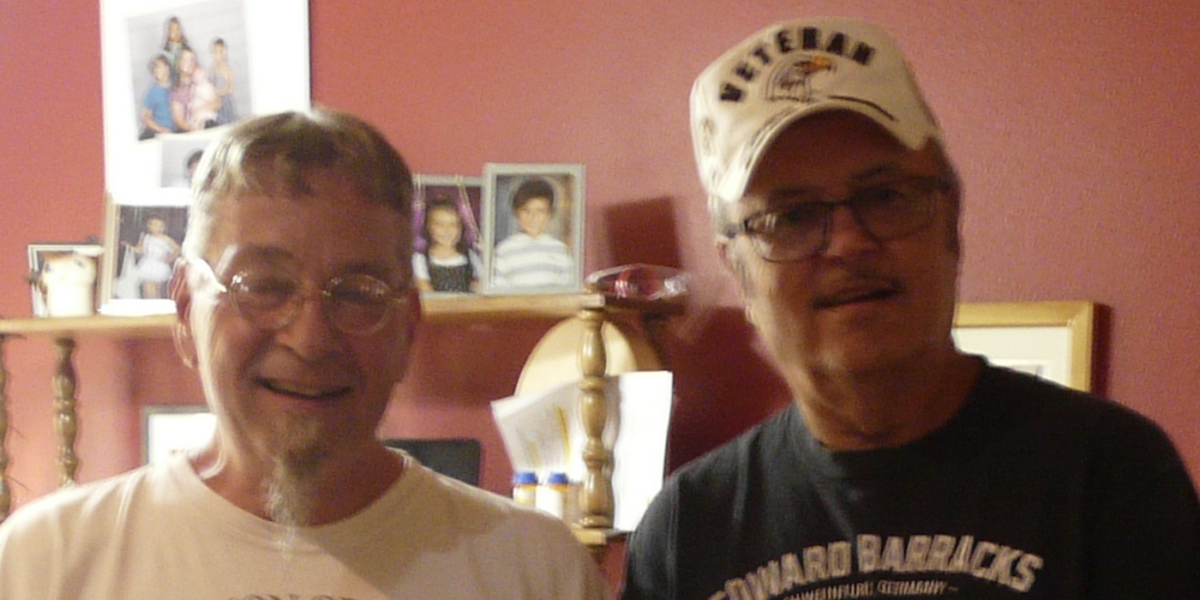 Today we’re joined by Budd Parker and Tim “Pete” Fairbanks. Budd is a Navy veteran and descendant of the White Earth Nation. He lives in Osage and was raised by grandparents who knew Civil War soldiers. He and his crew, including cousin Pete Fairbanks, dig through records. They clear forgotten cemeteries and set corrected headstones so families can hear their ancestors’ names again. Pete is also from the White Earth Nation, and he works with Budd to restore headstones and graveyards.
 - Alex Kmett: Culture as Curriculum, Language as Medium
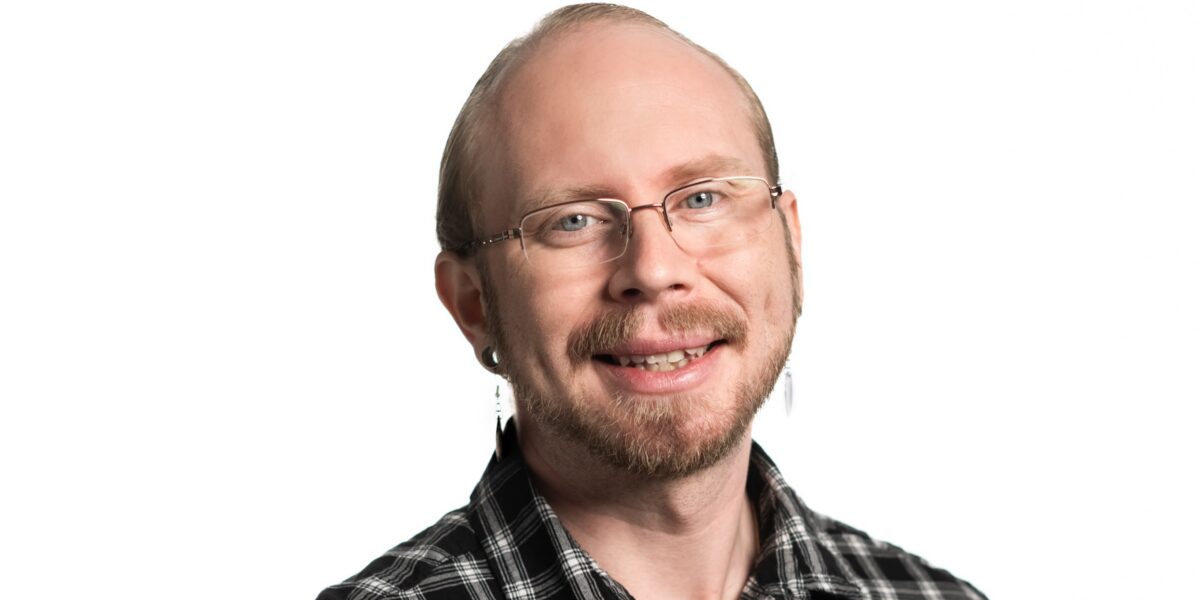 Today, we’re speaking with language revitalization leader and cultural educator Alex Kmett. Alex is a citizen of the Red Lake Nation and a descendant of the Leech Lake Band of Ojibwe. He’s a 2026 Bush Fellow and a co-founder of a charter school in Red Lake Nation.
 - Ryan Dixon: Making Friends with the Dakota Language
 Today, we’re speaking with Ryan Dixon. Ryan is an enrolled member of the Oglala Lakota Tribe from Pine Ridge in South Dakota and has spent over two decades immersed in the Lower Sioux community in southern Minnesota. He trained under First Language Dakota speakers, and he now teaches Dakota. An educator and Indigenous language activist, he co-founded a Dakota Immersion Head Start programming and works to keep the language alive for future generations.
 Minnesota’s Native Political Candidates, and the Pipestone Pipeline