
This week, we look back at Producer Chaz Wagner’s interview with first-language speaker Gordon Jourdain, and how his love for the game of hockey led to his historic Ojibwe language broadcast of a Minnesota Wild game.
Executive Producer: Travis Zimmerman
Producer: Chaz Wagner
Anchor: Marie Rock
Editorial support: Victor Palomino
Mixing & mastering: Chris Harwood
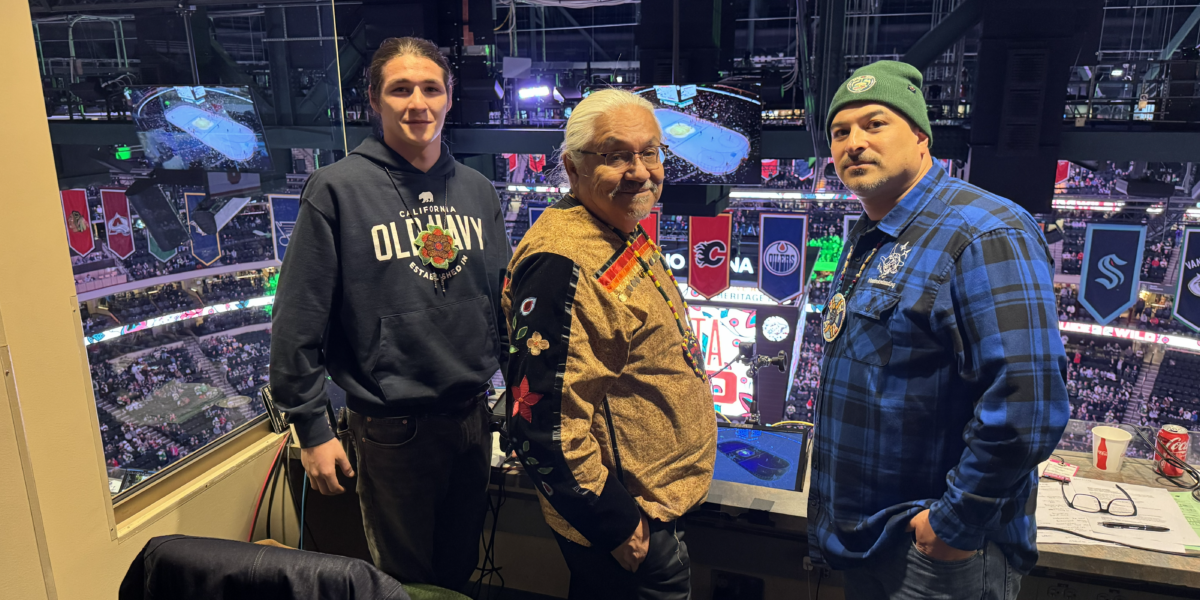
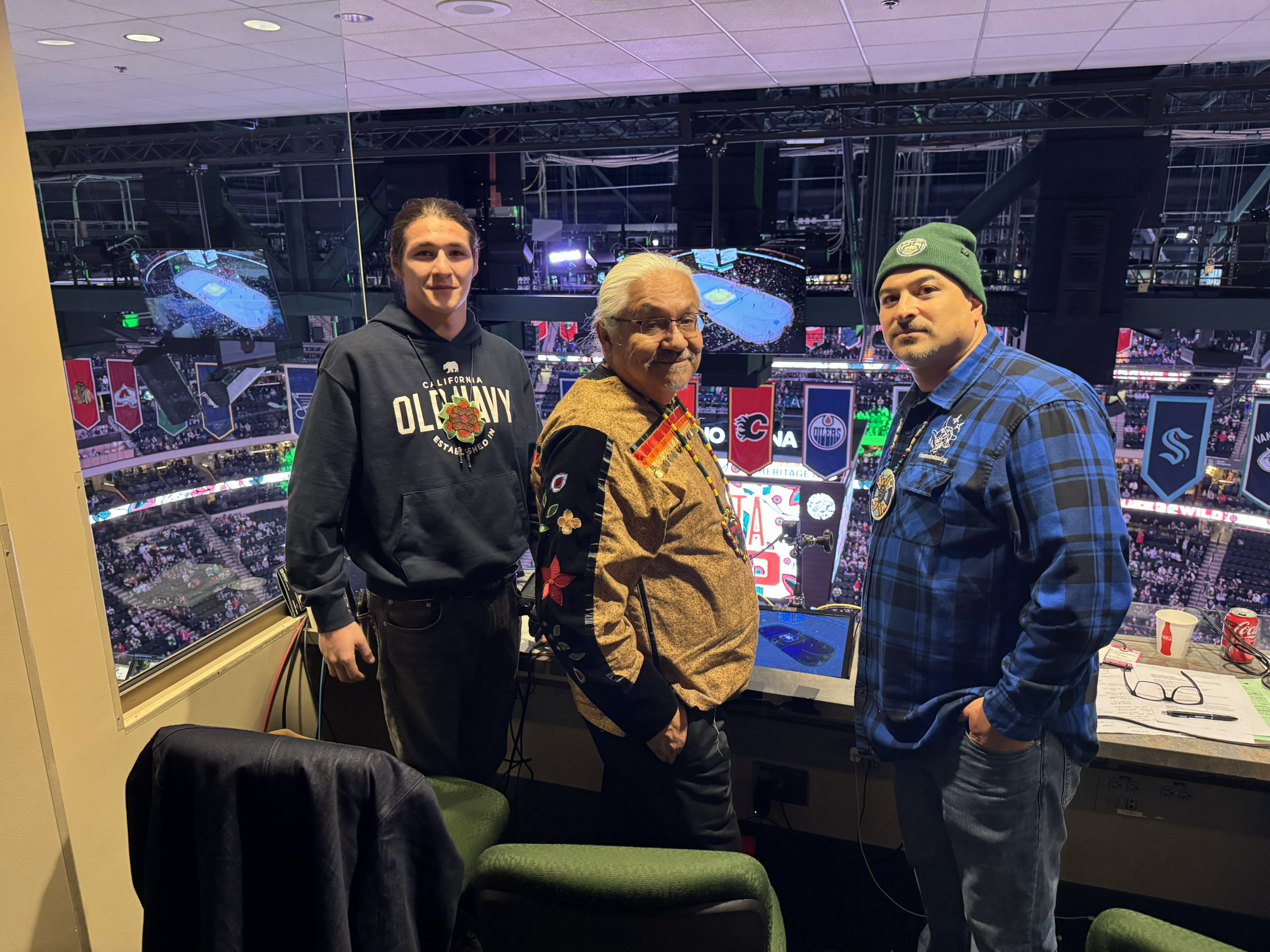
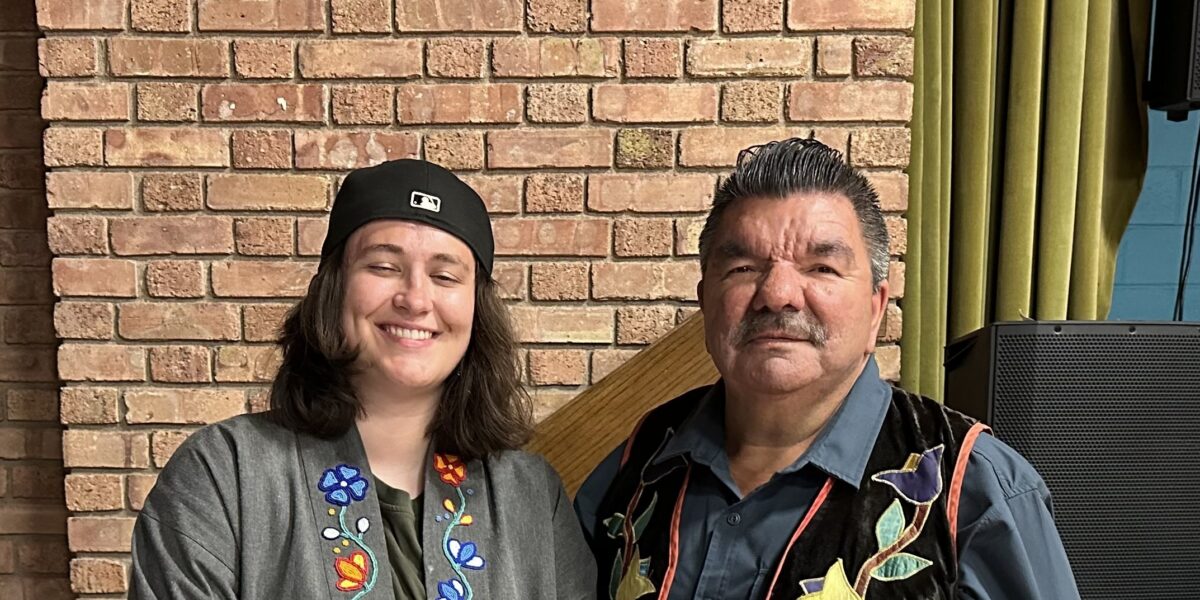
Image: Announcers for the country’s first broadcast of a National Hockey League game in Ojibwemowin at Grand Casino Arena on 11/28/25: James “Ginoonde” Buckholtz, Lac du Flambeau Band of Ojibwe; Gordon “Maajiigoneyaash” Jourdain, Ph.D., Lac La Croix First Nation; and Chato “Ombishkebines” Gonzalez, Lac Courte Oreilles Band of Ojibwe [credit: Dan Ninham]
—–
For the latest episode drops and updates, follow us on social media.
Never miss a beat. Sign up for our email list to receive news, updates and content releases from AMPERS. ampers.org/about-ampers/staytuned/
This show is made possible by community support. Due to cuts in federal funding, the community radio you love is at risk. Your support is needed now more than ever. Donate now to power the community programs you love: ampers.org/fund
TRANSCRIPT
[Minnesota Native News theme]
Marie Rock: You’re listening to Minnesota Native News. I’m Marie Rock. This week, we look back at Producer Chaz Wagner’s interview with first-language speaker Gordon Jourdain, and how his love for the game of hockey led to his historic Ojibwe language broadcast of a Minnesota Wild game.
Gordon Jourdain: Everybody in Lac La Croix were extreme hockey fans and they all had favorite teams and the only time that we heard hockey was through the the airwaves.
At the time when I was growing up, we, of course, didn’t have electricity there. We didn’t have any kind of running water or anything. But the only way that we would ever have any kind of outside communication was through those radios that were operated by batteries. So, and the only stations that we would get would be from, of course, Fort Francis and Duluth, which were like closer to Lac La Croix than anything else. So the people that I listened to and all my family, my brothers and sisters and my mom and dad, they were all aunts and uncles.
So the the um the people that were talking were usually hockey night in Canada they call it was would would just be on on Saturday nights and the the people that were talking there were like amazing how they describe that but they were used talking in in English not Ojibwe and and as a child I could just imagine through their words the game that was being played on the ice, even though I never saw the game myself.
Chaz Wagner: So yeah, I just wanted to wanted to, you know, get talk to you about, you know, how you got got hooked up in and the Wild game and then in the broadcasting Ojibwemowin?
Gordon Jourdain: The very first time I heard anybody broadcasting hockey in Ojibwe was that in Canada, you know, we we all had like reservation hockey teams. So we were driving up to Sulokot, Ontario, and I can’t remember, APTN, Aboriginal People’s Television Network. No, Wawatay News used to have, must have been broadcast. They were the ones that were broadcasting that. So we were driving up there, me and my brother-in-laws, we were on our way up there, and all of a sudden, they were turning the dials on the radio in the car. We heard somebody talk in Ojibwe and they were broadcasting it in Ojibwe and we were just like, oh my gosh, we just burst out in laughter. That was the very first time that we heard anybody broadcast a hockey game in Ojibwe. It was so much fun. Like it was like we were just crying in tears. We were laughing at the words they were using because we played hockey over there in Lacroix all the time and we we played. Of course, you know that the community was 100% Ojibwe language at one time. And when we played sports or did anything over there, we were always using the language in everything that we did. So when we played hockey, we were playing hockey all the time. So I developed a really good vocabulary to describe all the things that we were doing, not through myself, but listening to my cousins and my brothers and my mother, my grandmother.
I used to just practice on my own when I’m watching hockey like I’ll have it, I’ll have the NHL channel on on mute, and I’ll just like talk to myself. But I’ve always wanted to do that because hockey is like a oh, it’s an action oriented game. And Ojibwe lends itself to the as a perfect language to describe what they’re doing, yeah, because it’s an action oriented language.
So how I how I became involved with with the NHL inaugural broadcast was I got I got we were driving home. My wife, Rosie and I were driving home and she said, if there was ever a dream job that you could have, what would it be? And I couldn’t think of anything. And then she finally said, what about broadcasting a hockey game in Ojibwe? And I’m like, what? An NHL hockey game in Ojibwe, she said. I said, what? So I was like, oh, my gosh. It was amazing.
Chaz Wagner: It seems like there’s a lot of excitement and there’s a lot of momentum and broadcasting in Ojibwe language, do you foresee that’s going to be something in the future?
Gordon Jourdain: I hope to influence younger people or even older people that have more uh elaborate vocabulary than I do to come out and and participate in in making Ojibwemowin as as the language of everything in our world, because that’s the way it used to be. And I also would like people who played different sports. They’ve asked me to do like football and basketball. I had never played those, I wouldn’t be able to do that. I probably could, but I’m not sure if I would be able to understand how the game is played if I’ve never played it before. So because I played hockey, then it’s easier to describe how I felt when I was doing it. But I hope that by documenting things like this with the contemporary technology that we have, we have a repository of language that would otherwise not be available to anybody in the future or even right now. So I’m hopeful.
Marie Rock: That’s all for this week’s episode. Join us next time for more voices and stories that inform, uplift, and shape our communities, right here on Minnesota Native News.
[Music: Minnesota Native News Theme]
Marie Rock: Minnesota Native News is produced by AMPERS: Minnesota’s Community Radio Stations. Made possible by funding from the Minnesota Arts and Cultural Heritage Fund and the citizens of Minnesota.
More from Minnesota Native News
- Day of Remembrance Honoring Boarding School Survivors, and Bowwow Powwow on Stage
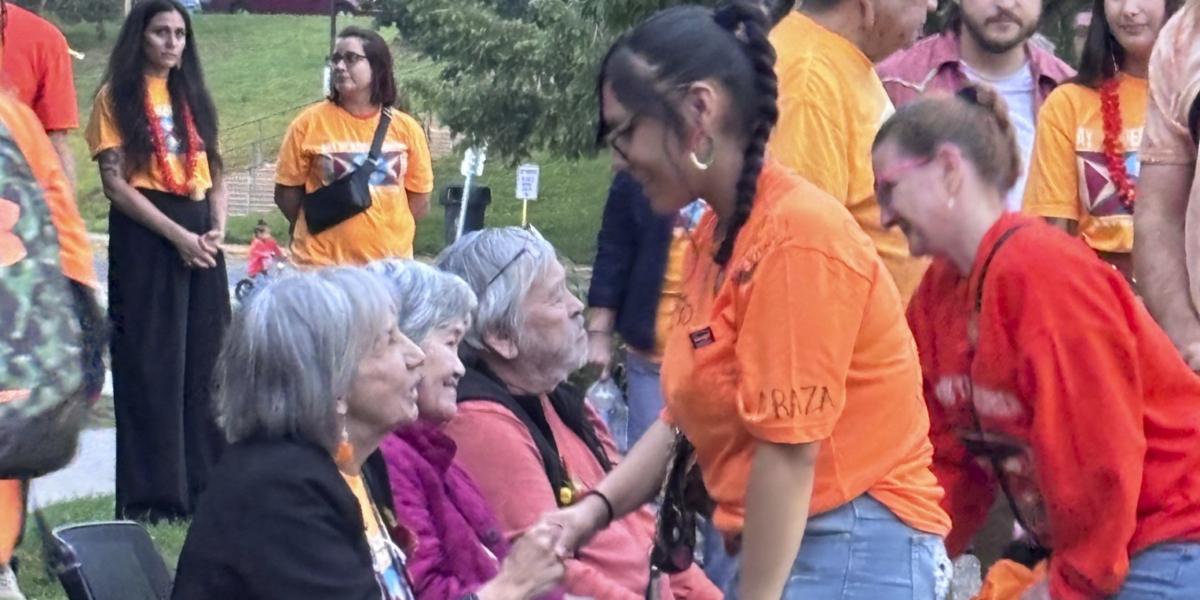 This week, the community gathers to honor boarding school survivors and a popular children’s book debuts as a play.
 - MNN Extended Interview: Bryan Bosto
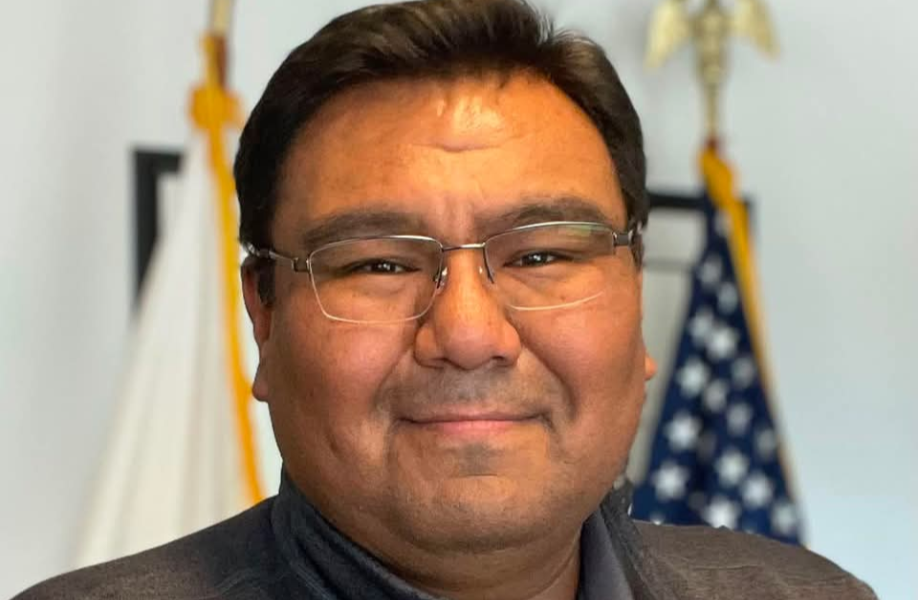 This week, we revisit producer Emma Needham’s interview with Bryan Bosto, who was recently inducted into the Minnesota Lacrosse Hall of Fame for the work he has done in growing the game in Native communities.
 - Dagwaagin Wiikonge’ (Fall Feast) at AICHO, and the New President at Leech Lake Tribal College
 This week, we visit a Fall Feast in Duluth, and we meet the new President of Leech Lake Tribal College.
Subscribe to Minnesota Native News in your favorite podcast app


 Bradley Harrington: The United States 250th Anniversary from an Anishinaabe Perspective