
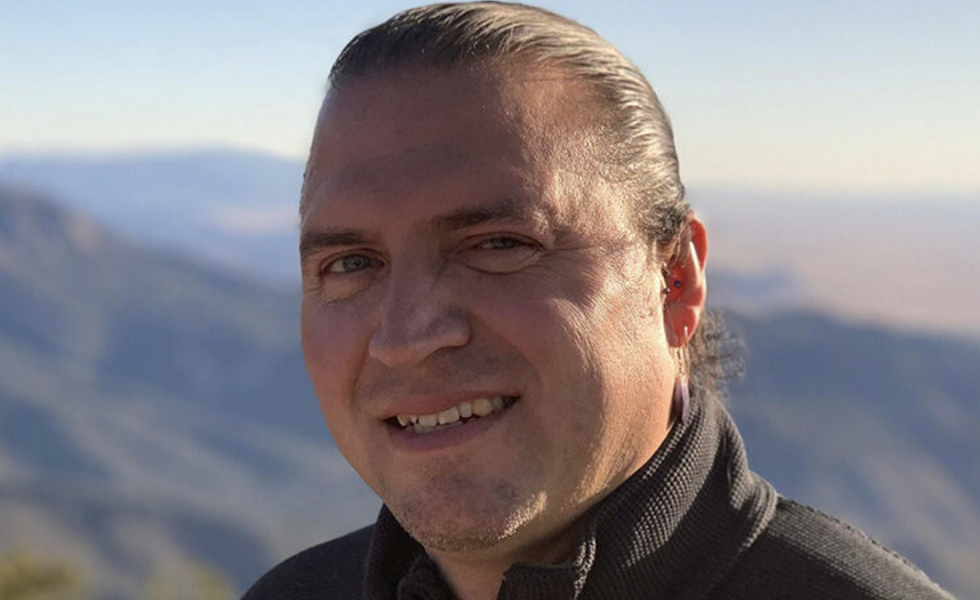
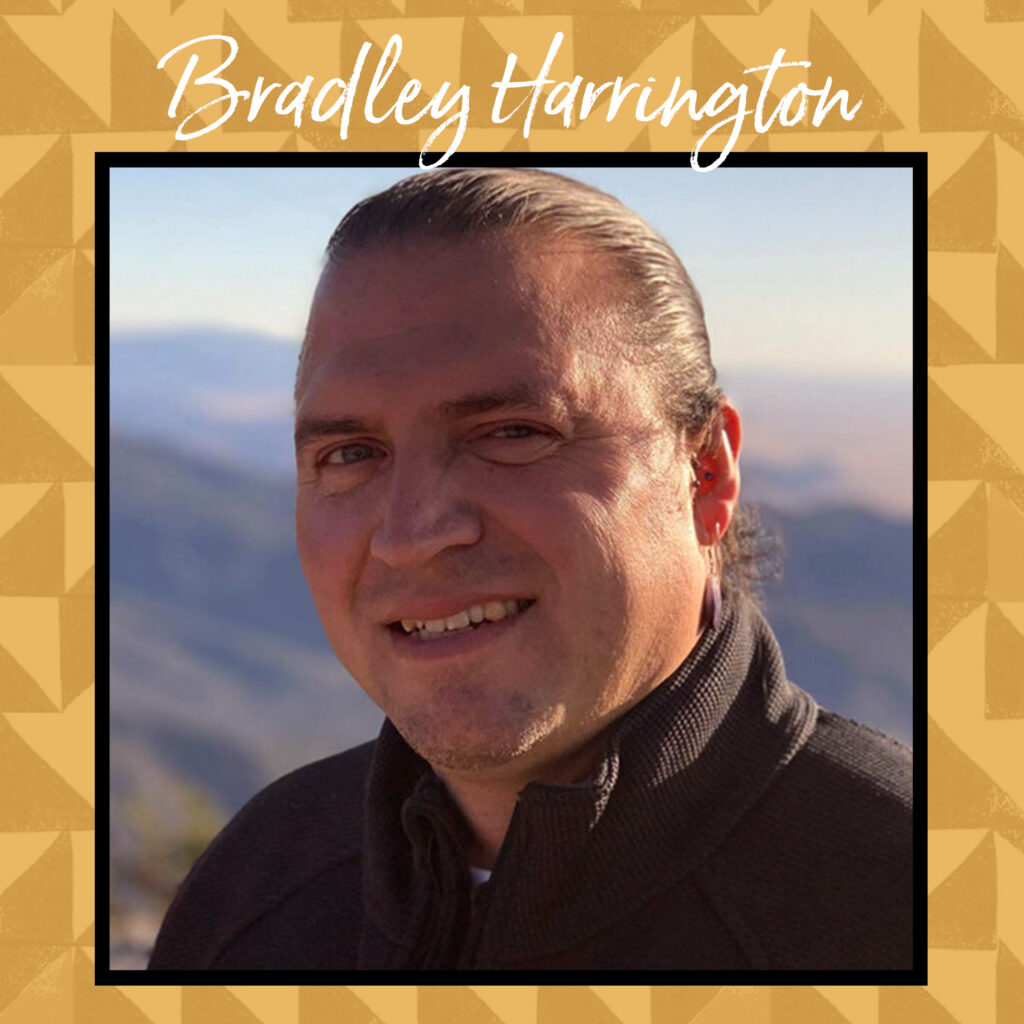
On this episode Leah and Cole speak with Mille Lacs Band of Ojibwe citizen Bradley Harrington who recently penned an article in the Mille Lacs Band newspaper, Ojibwe Inaajimowin, about 250 years of US occupation as the country marks the anniversary of the signing of the Declaration of Independence.
Bradley delves into the politics that led to the European occupation of the continent, and how a belief that the land was theirs by divine right and Supreme Court lawmaking ignored thousands of years of Native history and stewardship. He shares what the country’s 250th anniversary might look like from the perspective of an Anishinaabe citizen.
He also catches us up on what’s happened in his life since Leah and Cole last spoke to him in 2022. How a career shift has made it possible for him to devote more time to making the Ojibwe language accessible to learners. How years after his own incarceration he is going behind bars to be of service to prisoners. And, how learning ceremony from his elders has led him to connect with the larger Anishinaabe community.
—–
Hosts / Producers: Leah Lemm
Editor: Britt Aamodt
Editorial support: Emily Krumberger
Mixing & mastering: Chris Harwood
Native Lights is produced by Minnesota Native News and AMPERS with support from the Minnesota Arts and Cultural Heritage Fund.
—–
For the latest episode drops and updates, follow us on social media.
Never miss a beat. Sign up for our email list to receive news, updates and content releases from AMPERS. ampers.org/about-ampers/staytuned/
This show is made possible by community support. Due to cuts in federal funding, the community radio you love is at risk. Your support is needed now more than ever. Donate now to power the community programs you love: ampers.org/fund
TRANSCRIPT
[Music: Native Lights Theme]
BRADLEY HARRINGTON: Why is the United States the governing body here? Right. Well, normally point off to the Revolutionary War because they beat England. Well, why was England governing body around here? And then now I started seeing marketing around celebrating 250 years, I was like, what? What are we celebrating, you know?
COLE PREMO:
Boozhoo, welcome to Native Lights, where Indigenous voices shine. I’m your host Cole Premo.
LEAH LEMM: And I’m your other host Leah Lemm. Miigwech for joining us. Native Lights is more than a podcast and radio show. At its core, it’s a place for Native folks to tell their stories. Every week, we have great conversations with wonderful guests from a bunch of different backgrounds, doctors, educators, language warriors, you name it. We talk to them. They have a wonderful mix of passions. So we talk to them about their gifts and how they share those gifts with their community, and it all centers around the big point of purpose in our lives. And it’s another day, Cole. Another opportunity to amplify Native voices, which is what I believe is one of our gifts. I think we shall embrace that today, just like most other days. How are you?
COLE PREMO: We shall. Oh, I’m great. You know, I’m sure people will get sick of me talking about my kid.
LEAH LEMM: Never!
COLE PREMO: But he had a, he had a daycare incident, I will say, so feeling a little some sort of way about that.
LEAH LEMM: Oh, did he bite somebody?
COLE PREMO: How did you, how did you guess?
LEAH LEMM: Are you serious?
COLE PREMO: How did you guess?
LEAH LEMM: Yes, very normal, yeah.
COLE PREMO: And it’s like it’s funny because we think, what if what if Artem was the one who got bit, we’d be so pissed. So it’s like we’re on the other side of it, where he bit somebody, and it’s like, and he also pulled a highchair down on his face, so he’s got like a bruise on his eye.
LEAH LEMM: He’s a little tough guy.
COLE PREMO: Yeah, he’s just just causing a ruckus. Marvin did that, I’m sure.
LEAH LEMM: Well, I don’t know about that.
COLE PREMO: Of course.
LEAH LEMM: But we know about things like that. I think one of my favorite stories from Marvin, he vomited on the kid’s back.
COLE PREMO: Oh, great.
LEAH LEMM: I felt so bad. Saw, like, the kid’s mom, you know? A couple weeks later, I was like, “I apologize for that.” She just kind of laughed, because I mean, kids are, I tell you.
COLE PREMO: Yeah, something else.
LEAH LEMM: They’re wild cards,
COLE PREMO: Yeah, yeah. So that’s my thing, you know, and just feeling weird about it, but….
LEAH LEMM: Oh well, at least he’s not 13 doing that, at least one year old, so I know, yeah, but well, Marvin’s 13 now, and that’s….
COLE PREMO: Right, he’s in his teen, teen years now, it’s crazy.
LEAH LEMM: I tell you. You know, I was warned. Just gotta say, some of our previous guests too. I was warned about the teenage years. It is just a different mix of biting and pulling highchairs down, not those things, just a different thing that feels similar.
COLE PREMO: Well, you knew me when I was a teenager, so you know that it can get, it can get rough.
LEAH LEMM: Oh, you’re so sweet.
COLE PREMO: All right.
LEAH LEMM: You’re just sweet.
COLE PREMO: I had a rage about me every now and then.
LEAH LEMM: A little bit. I think we all can, but that’s a, it’s a turbulent time.
COLE PREMO: Yeah, so many feelings, so many big feelings, you know, feeling all emo.
LEAH LEMM: Tough enough as an adult, but yeah, big, big feelings. Man, his voice is getting low.
COLE PREMO: Yeah, I bet, I bet.
LEAH LEMM: Adorable.
COLE PREMO: I’m curious, how low it’ll get. Better not be lower than my voice, I swear, he’s already gonna be taller than me. You can’t have a lower voice than me.
LEAH LEMM: Yeah, he’s, he’s well above me now. So, yeah, that’s what we hope for, though. We just hope they grow and become adults. And Marvin said the other day, he’s like, “You know, we spend most of our lives as adults.”
COLE PREMO: Yeah.
LEAH LEMM: I was like, I hope so, that is, if you get to live a nice long life, that’s actually a good thing.
COLE PREMO: What we got today, Leah? What we got?
LEAH LEMM: Well, we’re talking about another birthday.
COLE PREMO: Oh, there you go. Wow.
LEAH LEMM: I’m getting good at this, and we’re talking about another age, another birthday, we’ll call it a, yes, an anniversary of sorts, which, of course, is very complicated. How do we talk about it, even is kind of my question when it comes to the United States signing the Declaration of Independence 250 years ago. Which brings us to our guest, I saw in the Mille Lacs newspaper, the Inaajimowin, a piece called “200 Years of US Occupation,” and the author was Brad Harrington, of course, a Mille Lacs Band of Ojibwe citizen. He’s back on the show today. We spoke to him in February of 2022 when he talked about his sobriety journey and his entrepreneurship, and I thought it would be nice to have him on reflecting on 250 years of the United States of America. So, why not? But here he is. Boozhoo, Brad.
BRADLEY HARRINGTON: Aniin, aniin.
COLE PREMO: Howdy, howdy.
LEAH LEMM: How are you doing?
BRADLEY HARRINGTON: I’m good, I’m good. Yourself?
LEAH LEMM: Very good. Thank you for making time to chat.
COLE PREMO: All right, boozhoo, Brad, could you please introduce yourself and let us know where you’re joining us from?
BRADLEY HARRINGTON: Aniin. [Introduces himself in Ojibwemowin.] My name is Bradley Harrington, and I’m joining from the Mille Lacs Band Reservation on the west side of Mille Lacs Lake here today.
COLE PREMO: Thank you for joining us. How are you doing? How is the family doing?
BRADLEY HARRINGTON: I’m quite well. We just got done with our ceremony time, did great, kids did well, and now, now that we’ve ended, they’ve scattered about to go visit their friends who they missed.
LEAH LEMM: And how long are you out doing ceremony?
BRADLEY HARRINGTON: This session was about 10 days, 10 days, yeah.
LEAH LEMM: And how do you feel when you get done? You seem very serene.
BRADLEY HARRINGTON: Yeah, well, I was quite tired. We got done on Saturday. I did my best to do absolutely nothing yesterday, although we did go watch a movie, and then today just a couple little errands, and then did some time with the band on one of the boards that I sit on, but yeah, most of all I feel after the rest anyway nice and let go of a bunch of stuff I didn’t need to carry around.
LEAH LEMM: And what movie did you see?
BRADLEY HARRINGTON: We went and watched Toy Story 5.
LEAH LEMM: They’re on five now? Okay.
BRADLEY HARRINGTON: Yeah, turning into a soap opera.
LEAH LEMM: And how are you and the family doing?
BRADLEY HARRINGTON: We are doing great. We just graduated one this year. We got two of them coming up next year, and then the younger ones, they’re starting to get into their sports habits, and yeah, after getting three of them through high school sports here, I’ll have a few more. I’m getting ready to start, so it’s always fun.
LEAH LEMM: Wow, that’s a lot of juggling. I know with our kid, I mean, he does like archery, he does music, and a couple other things, and that’s like a lot already. So I can’t really imagine doing so much more than that. Must have like a very well thought out calendar.
BRADLEY HARRINGTON: As thought out as one can get. The older ones are three-sport athletes, usually, and one, the daughters, the older daughter, she joined an AAU basketball team, so that was quite interesting. One of the younger daughters, she joined a Junior Olympic volleyball, and both of these were going on over the winter, and that was really quite interesting. So, but lots of fun, lots of fun. They learned a lot, and I can tell they got a lot better.
COLE PREMO: You’re listening to Native Lights, where Indigenous voices shine. Native Lights is produced by Minnesota Native News and AMPERS, with support from the Minnesota Arts and Cultural Heritage Fund. Today, we’re speaking with Bradley Harrington, a Mille Lacs Band of Ojibwe citizen, who recently penned an article on the Ojibwe Inaajimowin, which is the Mille Lacs Band newspaper, on 250 years of US occupation as we mark the 250 years of the United States since the Declaration of Independence.
LEAH LEMM: So, Bradley, is there anything that you are thinking about these days or concentrating on that you’d like to share?
BRADLEY HARRINGTON: After nearly a decade of high-level tribal and state government work, I recently resigned my position back in February to focus more on language and culture. So we had started a nonprofit called the Gidinwewininaan Foundation, something I’ve worked on over COVID, which was Gidinwewininaan.com which I was just trying to, we’ll work on something. My access to language during COVID was quite tough, much like anybody’s access to language resources that just a regular person can understand, because to use some of the resources online, you have to learn how to speak linguistics, so that’s the terminology, such as predicate, conjunct. What is a dubitative, all that other fun stuff. Like what’s what does verb, animate, intransitive actually mean, you know.
LEAH LEMM: Like really technical terms,
BRADLEY HARRINGTON: Yeah, yeah, and they’re all linguistical terms, which is, you know, a good bridge for us, because without it we would have been absent a lot of good resources. But now today, it’s like, how do we connect just a common person who may work their day job, kids, events? How can we connect them to the language without having them teach linguistic terminology. So I was trying to fill that gap, and over time, well, what, six, five years, four years, or so, we decided to put together a nonprofit and focus on language resource creation and hosting and access, and our main three pillars are resources, access to resources, and opportunities to use resources. So that’s what’s keeping me busy nowadays. Now I’m fighting the urge to get back into work, work for one healthcare as a tough one, so I’m, you know, switching from union-backed job provider health care to now navigating the state-offered health care, and so on, but healthcare is almost a big one to put me back into the workforce, but I’m trying to hang in here.
LEAH LEMM: Wow, I imagine. So, you moved from, you know, working for the state and then popping into language and culture, the foundation that you’re building. Why did you make that change?
BRADLEY HARRINGTON: So, I started my language journey about 2010, during the teens, my language really took off, and it was because I was able to have access to elders, Larry Smallwood, [Obizaan] Lee Staples, Joe Nayquonabe Sr., a bunch of others, and Doug Sam. I like to talk about Doug a lot. So I had access to them. So, when people come up to me and ask me, “Hey, I want to be able to speak just like you’re able to speak. What did you do? How can I go do it?” And I can’t suggest them to do it my way, because the access to the resources that I had access to aren’t there. So, along with my language journey, I also learned how to perform ceremonies such as namings, dish settings, sending off tobacco, and funerals, so as some of these elders are getting sick, like Larry passed 2017, Obizaan Lee was encroaching into 70s, and then Covid happened. We had them all stay home, and a couple of us, second language people, picked up the funerals, and I’ve been doing funerals now for six years, since 2020-2024 I started being asked to do more funerals, namings, and other ceremonies. And then 2025, I was asked to do more and more communities, not just Mille Lacs, Leech Lake, Fond du Lac, St. Croix. Recently, I’ve been out to LCO [Lac Courte Oreilles]. So there I was working a full-time state job, kept me on the road a lot, fairly busy. The spirits made it so to where I was usually able to accept tobacco without too much interference, but that started meeting up my job and my community responsibility started overlapping a lot more often at the end of 2025. And so I decided that 2026, I didn’t want to have to pick between two. Very passionate about my work, and I was very passionate about my community responsibility, and I didn’t want to keep being put in a position to have to choose between the two, because it’s a disservice to both, so I had to give one up, and I’ll always choose the language over the job, right?
COLE PREMO: You talked about going to, you know, being asked to go to other communities. What’s that process like, leaving Mille Lacs and going to these different communities and being mindful of their own values and things like that?
BRADLEY HARRINGTON: So what I tell them is I can only bring what I was taught, but I also want to be mindful that there may be community sometimes practices, sometimes even family practices. So, if they ask me, like, what do we do about, let’s say, the dish, right? I’ll ask them, I was like, what do you recall them doing when you were younger? What do you recall your older relatives doing when you were younger? And if they remember, I’ll be like, encourage them to do that, you know, do what your relatives did, do whatever you can remember. If they can’t remember, I’ll offer them a few things that I’ve seen. So Larry and Obizaan, they were traveling to many different communities, and I was very fortunate enough to be able to see different practices happening out there, and I’ll be like, this is what I see done in Mille Lacs. This is what I’ve seen done elsewhere. Whatever makes your heart happy, but I’ll encourage you, if you don’t know, ask your community, and usually they’re able to find something.
COLE PREMO: You went through a lot on your sobriety journey. How’s that going?
BRADLEY HARRINGTON: Oh, yeah, it’s been pretty good. I recently went up and did a talk, shared my ceremonial journey during recovery up in Red Lake at a walleye roundup, they called it. They’re camping out at a resort near Red Lake up there really well. I just got passed back in April, so it’ll be 17 years of non-usage. So we’re clean, whatever, whatever term you decide to use. I haven’t used any substances since 2009. So 17 years in recovery by giving back I’ve been able to volunteer more often in the prison system. So I’ve been able to go in monthly now to do their sweat lodges, and in doing so I was able to, you know, share, share a little bit how I think of it as is like try to be the person I wish I had when I was in prison, and so I try to share that, and I think I’ve named over 10 of them now in prison. So at least they’re getting out with their names, and or they’re in there with their names, and they can build their relationship and with the spirits and whatever it is that they’re doing. So that’s all part of my giving back, right, being that part that I wish I had in the beginning of my recovery.
LEAH LEMM: Thanks for sharing, Bradley. Do you feel like it helps you as well, working and volunteering in the prison system?
BRADLEY HARRINGTON: Yep, before I got out, and as I said quite often by people getting out, is that you know they want to help give back, but very few do it. Like it’s extremely hard. I’ve been trying to find additional volunteers to go in. There’s been one or two others that went in that I don’t know, but yeah, trying to find additional help, but for me being able to give that back, how I view it is kind of like an ecosystem. What I give out eventually would come back and help me. You can’t keep what you are unwilling to give away, type of mindset. If I’m able to help one person in there, that’s one person who may go on to help someone else, and the whole chain of passing it on is has started, so you know that that could have been my purpose, one of my purposes here, while walking this earth, when I want to get done right, I feel like, you know, I accomplished something, something that I know is going to happen again, but you know, for that day. I know that I went in and I was there, man, I few times there, we packed over 35 guys in a sweat lodge. So you know, I feel like being there for 35 guys who normally don’t have anybody show up for them, you know, it can be life changing for them, even though they’re locked up.
LEAH LEMM: Were you like ready to go, ready to do it, to volunteer at a prison doing ceremony, or did you have some hesitation?
BRADLEY HARRINGTON: For me? I knew I wanted to go back, but at the same time, I, I knew I couldn’t just go back empty-handed, and with the DOC rules, I couldn’t go back until I was off parole, anyway. So that would have put me in 2017. So I just went and learned all that I could, and then when it finally came around time to be able to go back in, I actually asked before, maybe a year and a half before I was even eligible to go back in, I started writing emails to some of the staff that were in that treatment program to the assistant warden. “I’ve been out, been almost five years. I got no violations during my parole. I’ve learned how to do this, I learned how to do that. I just want to come in and give back.” 2017 while still on parole, they let me go back in and do a talk. They didn’t let me back in for another five years after that. 2022 when they let me back in to go to a graduation ceremony, and then yet it was three years after that where they finally let me go back in for a sweat lodge. So it was close to a 10 year process from the first time I went in to being able to go in as a regular volunteer, and I kept pushing, I kept pushing. The chaplain there was very helpful, very willing to share the staff, as you know, they got to know me, they’ve, you know, been more open. It’ll be 10 years I’ve been going in here in about March.
LEAH LEMM: You’re listening to Native Lights, where Indigenous voices shine. Native Lights is produced by Minnesota Native News and AMPERS, with support from the Minnesota Arts and Cultural Heritage Fund. Today, we’re speaking with Brad Harrington, citizen of the Mille Lacs Band of Ojibwe. He joined us previously in February of 2022. So we’re taking some time to catch up today. Recently, he wrote an article for the Ojibwe Inaajimowin called “250 Years of US Occupation,” and we’re talking about that with him today. It has been 250 years since the Declaration of Independence was signed. Bradley, you wrote a piece for the Inaajimown, or the Mille Lacs newspaper, called “250 Years of US Occupation.” I’m going to tell you that the headline caught my eye, and I knew I wanted to chat with you about that. Can you say a bit about what inspired you to write a piece with such a headline?
BRADLEY HARRINGTON: In my quest to learn Ojibwe. I learned why I didn’t know it, why my parents didn’t know it. You know what happened. And then also I learned more history, right? I learned about Christopher Columbus because of all the Columbus Day information that comes out all the time, all the information that comes out about Native American Heritage Month, and so on, right. Lots of information that we’re able to get, and going to college and other classes, I was able to learn, you know, keep on learning history wise, right. And I started thinking, why is the United States the governing body here? Right. Well, normally point to to the Revolutionary War because they beat England. Well, why was England governing body around here? And my quest to learn more and more about treaties, culture, history, prophecy, ceremony. Ceremony, and then now I started seeing marketing around celebrating 250 years. I was like, what? What are we celebrating? You know, we’re turning a blind eye to what America actually is. They’re going to go and say they stood up for their rights as people. They stood up to the monarchy, a king, you know, all this bravado. But all in all, it was just to develop a consumerism society, so an elite few were able to be rich. You know, I try to think about what I gotta write every month, because I write a column every month, and I try not to write the same thing over and over, and I was listening to, I think, it was MPR, and they’re doing something about 250 years of freedom, or whatever. So I was like, 250 years, it’s like 250 years of US occupation, if we’re gonna use the same terminology as the Hawaiians use. The Hawaiians don’t use any other terminology other than the US occupation of the Hawaiian Islands. Well, we’re in a US occupation of a good chunk of North America here. And how the United States was able to gain the governing authority over these lands is based off of a Supreme Court ruling in 1800s. It referred to the United States gaining authority because they beat Britain, who staked the claim as part of the doctrine of discovery. Well, who gave you know power to the doctrine of discovery? Right, it was a papal decree. The Pope just went and declared that any land that is uninhabitated by non-Christians is quote unquote “discovered by a European nation that has adopted Christianity” and became a Christian nation. They now have the right to govern that land. Thinking of it in reverse, that’s like an Ojibwe spiritual leader telling the rest of the Ojibwe, anybody who doesn’t practice Midewiwin customs, um, you all can claim that land. First off, you got to have a heck of an army, right? That’s what the Europeans came here with, and also happening around that same time, were inquisitions, right? So had a good few decades of blood, unmerciful actions, human to human, you know, all that just came about, in what was coined as the New World. One of the things in the Declaration of Independence says anything west of those mountains over there, what are they, the Appalachian Mountains, was Indian land, that the term for Indigenous title, Aboriginal title, was starting to be coined quite a bit around then 1763 King George said, “You can’t claim that land, only the king can expand the kingdom.” Even though they just fought a French and Indian war for that land that would get them to the Mississippi River, the king went and told them that they couldn’t go and claim it, they couldn’t go and make deals about it. So that was one of the other reasons why the Declaration of Independence, and it was written in there that King George was riling up the Indians, who know nothing but warfare and their merciless Indian savages that would kill anybody for no reason. That’s how I got to thinking of it. They’re really trying to amp up this July 4 here. There’s a whole parallel story. Well, there’s plenty of parallel stories, but what 250 years of America, United States being, and I just wanted to share a little bit of what it can be like from an Anishinaabe perspective.
LEAH LEMM: So 250 years. Complicated history. Thank you for sharing from your perspective, Bradley. Chi-miigwech.
[Music: Native Lights Theme]
LEAH LEMM: Brad Harrington, Mille Lacs Band of Ojibwe citizen. And you know some really good things to think about. I think, yeah, we could all use the opportunity to read some of those founding documents.
COLE PREMO: Yeah, exactly.
LEAH LEMM: Because, gosh, I feel like we know them, but do we?
COLE PREMO: Go a little deeper than that and kind of read up on it and really understand the scope of all this. So, I appreciate him for getting that out there into the awareness, the community, so, so, yeah. Chi-miigwech to Bradley Harrington. I’m Cole Premo.
LEAH LEMM: And I’m Leah Lemm. Miigwech for listening.
COLE PREMO: Giga-waabamin.
LEAH LEMM: Giga-waabamin. You’re listening to Native Lights, where Indigenous voices shine. Native Lights is produced by Minnesota Native News and AMPERS with support from the Minnesota Arts and Cultural Heritage Fund.
Subscribe to Native Lights wherever you get your podcasts


More from Native Lights
- Budd Parker & Tim “Pete” Fairbanks: Restoring the Legacy of White Earth’s Forgotten Veterans
 Today we’re joined by Budd Parker and Tim “Pete” Fairbanks. Budd is a Navy veteran and descendant of the White Earth Nation. He lives in Osage and was raised by grandparents who knew Civil War soldiers. He and his crew, including cousin Pete Fairbanks, dig through records. They clear forgotten cemeteries and set corrected headstones so families can hear their ancestors’ names again. Pete is also from the White Earth Nation, and he works with Budd to restore headstones and graveyards.
 - Alex Kmett: Culture as Curriculum, Language as Medium
 Today, we’re speaking with language revitalization leader and cultural educator Alex Kmett. Alex is a citizen of the Red Lake Nation and a descendant of the Leech Lake Band of Ojibwe. He’s a 2026 Bush Fellow and a co-founder of a charter school in Red Lake Nation.
 - Ryan Dixon: Making Friends with the Dakota Language
 Today, we’re speaking with Ryan Dixon. Ryan is an enrolled member of the Oglala Lakota Tribe from Pine Ridge in South Dakota and has spent over two decades immersed in the Lower Sioux community in southern Minnesota. He trained under First Language Dakota speakers, and he now teaches Dakota. An educator and Indigenous language activist, he co-founded a Dakota Immersion Head Start programming and works to keep the language alive for future generations.
 Chef Sean Sherman Opens New Restaurant; Makoce Ikikcupi Hosts Arts Festival in Granite Falls