
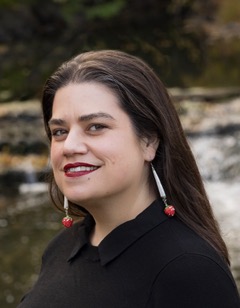
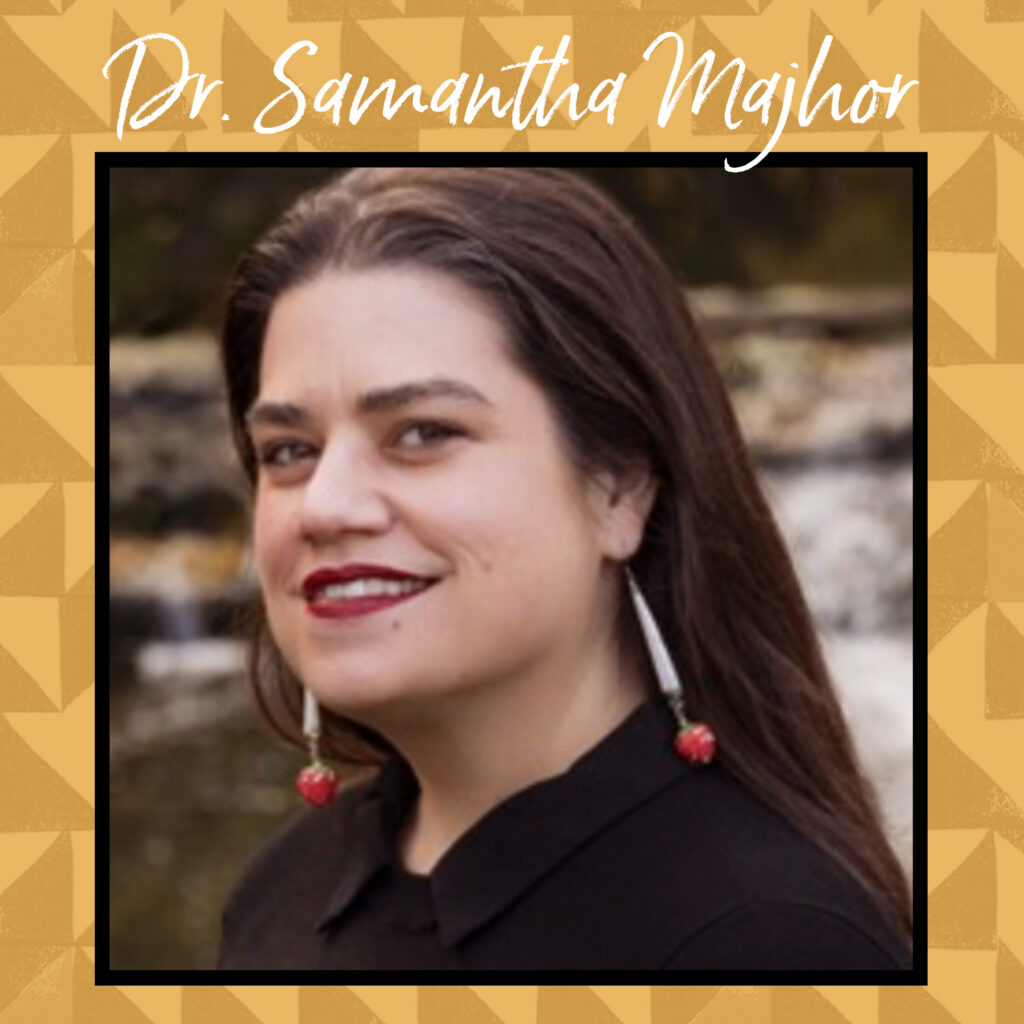
Today, we’re excited to welcome Dr. Samantha Majhor to Native Lights. Samantha is a direct descendant of Fort Peck. She’s Dakota and Assiniboine and is an assistant professor in American Indian Studies at the University of Minnesota. She focuses on Native American literature, particularly literature by Dakota and Ojibwe writers around the Great Lakes region.
Samantha gives us an inside look at the creation of the Oceti Sakowin Story Map Project, which she is co-developing. It’s a digital archive of oral narratives connecting Dakota and Lakota stories across the Oceti Sakowin diaspora. She also discusses the challenge of archiving this valuable resource online, while trying to keep it out of the reach of AI searches and web results, and how the stories spoken in the Dakota language might be their own best protection.
She talks to us about rematriation, what it is, how it’s different from repatriation and why it’s important to use this term when thinking about land back.
And, of course, we couldn’t talk with American Indian Studies and literature professor Samantha Majhor without asking her to share the books on her to-read list as well as some recommendations:
- To the Moon and Back by Eliana Ramage
- Back for Blood: Never Whistle at Night Part II edited by Shane Hawk and Theodore C. Van Alst JR.
- The Berry Pickers by Amanda Peters
- Python’s Kiss by Louise Erdrich
- The Grass Dancer by Susan Power
- Indian Horse by Richard Wagamese
- Whereas (poetry) by Layli Long Soldier
- There There by Tommy Orange
—–
Hosts / Producers: Leah Lemm
Editor: Britt Aamodt
Editorial support: Emily Krumberger
Mixing & mastering: Chris Harwood
Native Lights is produced by Minnesota Native News and AMPERS with support from the Minnesota Arts and Cultural Heritage Fund.
—–
For the latest episode drops and updates, follow us on social media.
Never miss a beat. Sign up for our email list to receive news, updates and content releases from AMPERS. ampers.org/about-ampers/staytuned/
This show is made possible by community support. Due to cuts in federal funding, the community radio you love is at risk. Your support is needed now more than ever. Donate now to power the community programs you love: ampers.org/fund
TRANSCRIPT
[Music: Native Lights Theme]
SAMANTHA MAJHOR: When I think just 15 years ago, looking at Native literature, I could name all the authors, all the big authors of the late 20th century and the early 21st century. Now we’re seeing this huge explosion in Native publishing. I want to see Native American literature as a field grow and to really take its place as it should, among the great literatures, right, that are studied.
COLE PREMO: Boozhoo aaniin. Welcome to Native Lights, where Indigenous voices shine. I’m your host Cole Premo.
LEAH LEMM: And I’m your other host Leah Lemm. Miigwech for joining us. Native Lights is more than a podcast and radio show. At it’s core, it’s a place for Native folks to tell their stories. Every week we have captivating conversations with great guests from a bunch of different backgrounds. We’re talking community leaders, educators, scholars, healthcare advocates, language warriors, you name it. We talk to them, and we have this great mix of passions and interests. We talk with folks about their gifts and how they share those gifts with their community, and it all centers around the big point of purpose in our lives, and it’s another day, another opportunity to amplify Native voices. Hello, Cole, boozhoo.
COLE PREMO: Boozhoo, sis, how you doing?
LEAH LEMM: Pretty good, hanging in there, we’re now, yeah, warming up, and enjoying life. What’s new with you?
COLE PREMO: We’re kicking off summer birthday season in our family, of course, starting with me. One more year left in my thirties.
LEAH LEMM: Right? You had your birthday.
COLE PREMO: Goodness gracious.
LEAH LEMM: You know, I distinctly remember thinking about that years ago. What I would feel like when you or Bryce turned 40, like knowing that I’m older than both of you. I was like, how could that ever happen? There we go, here we go. But here we are.
COLE PREMO: The countdown has begun.
LEAH LEMM: It’s your next ascension, Cole, next like big push into this interesting life.
COLE PREMO: Yeah. And then we got Marvin coming up here, got Bryce, got Mariya, my wife.
LEAH LEMM: That’s right. The baby will be turning a year.
COLE PREMO: July 22 ,that’s the big one. We’re still, still got to get that birthday party figured out now. We’re gonna go about that, but we’ll see.
LEAH LEMM: That’s so fun.
COLE PREMO: Crazy stuff.
LEAH LEMM: But yeah, lots of stuff happening, lots of years just flying by. Was gonna say, I mean, we’ve been at Native Lights for years now. I can’t even count what the number of years. I know it takes more than one hand to count the number of years we’ve been doing Native Lights.
COLE PREMO: That’s crazy.
LEAH LEMM: Yeah, yeah. Really excited to kick off today’s conversation with Samantha Majhor. Samantha is a direct descendant from Fort Peck, she’s Dakota and Assiniboine, and is an assistant professor in American Indian Studies at the University of Minnesota, and she focuses on Native American literature, particularly literature by Dakota and Ojibwe writers around the Great Lakes region. She teaches some classes in Native American literary studies. That’s so exciting to me, and what I think is super cool, she’s got this project that she’s doing that she’s co-creating, called the Oceti Sakowin Story Map Project, which is creating a digital archive of oral narratives connecting Dakota and Lakota stories across the Oceti Sakowin diaspora, so I know that’s far-reaching and must be just an incredible project. So I’m really excited to talk to her about that. So, yeah, let’s welcome Samantha Majhor to Native Lights. Boozhoo, Samantha.
SAMANTHA MAJHOR: Hello, good to see you, good to meet you virtually.
COLE PREMO: Boozhoo, Samantha, we always like to ask as we get started, just how are you doing? How’s the family doing?
SAMANTHA MAJHOR: I’m doing well, and thanks for asking. We’re in quite a time. I think we can no longer just keep saying like unprecedented times. But my family’s good, I’m good, and that makes things okay, right? My dad and my stepmom are actually up from Oklahoma right now, and so we’re doing some visiting around Minneapolis, which is always fun.
COLE PREMO: What’s, what are you kind of geeking out about right now? What’s on the top of your mind? You know, what are you, what are you thinking about?
SAMANTHA MAJHOR: Well, you know, if you open the door to talking about books, I’m always happy to do that. I have a lot going on. I’m just about to go to Chicago for three weeks and do a little class at the Newberry Library with Dr. Jacki Rand. We’re co-teaching Native Studies grad students. On the topic of Native land management and rematriation, and sort of exploring what does rematriation really mean. This is a word we’re using a lot, especially now with land back, but how has this word been theorized, and what does it really mean, and how do, how does it have teeth in the sense of land back and rematriation, and how we see Native women in particular leadership roles? So I’m really excited for that, and so I’ve been reading in anticipation of that a number of texts, Buffalo Bird Woman’s Garden. It really is her testimony through, narrated through a non-Native early 20th century anthropologist, but her presence really comes strongly through in this piece, and so she’s a Hidatsa agriculturalist. I’ve been loving that. And then on the fiction side of things, as I think about the fall, and I’ll be teaching Native American literature, which is my bread and butter, and my wheelhouse, I’m currently reading To the Moon and Back by Eliana Ramage, a story about a young Cherokee girl growing up and her aspirations to become an astronaut and go to the moon, space, sky, land relations, like it all just comes together in these two pieces right now that I’m reading, and I love thinking about those things, so I’m excited, and potentially to teach this one alongside some other novels
LEAH LEMM: You mentioned, rematriation, and there’s just a lot of words that go along with land back, land return, reclamation, repatriation, which has been used for different, like ancestral items coming back. Do you want to dive into rematriation just a little more? I think it’s actually pretty fascinating to kind of hear that distinction and perspective when it comes to these conversations.
SAMANTHA MAJHOR: When we think of repatriation, I mean, this has been a term that’s been used, part of legalese, you know, it’s part of NAGPRA, Native American Graves Protection and Repatriation Act. It comes from that idea of patrimony, of something going back to its father roots, father lands, and so I think it makes a lot of sense in Native studies, and from the Native perspective, to be shifting that language to rematriation. And this seems particularly to come up when in connection with land and land return, and the odd thing about it is that this has been, in my view, under theorized in Native studies. I think we’re about to see a lot of theorization about a lot of writing that takes up pre-matration, but honestly, this is something that really is a term that comes up in Lee Maracle’s book I Am Woman, I think in 1980. It’s something we hear a lot, but has not been academically written about as much as one would expect with the way we talk about it. And so the way I’m seeing different organizations talk about it, and this sort of budding academic conversation is really thinking about the way Native cultures, and again, there’s wide differences, but systems of matriarchal power are being better recognized, and we’re recognizing that that is the way forward as we move toward land reclamation. Are we just saying rematriation because patriarchy and patriarchal systems are embroiled with capitalism and capitalistic systems, and all of this that we’re sort of pushing back against? Is it just sort of a counter move in our language? Or is there something more deeply rooted there? Which is what I suspect, and what I think we will find in why we would use this term in particular for thinking about land relations.
COLE PREMO: You’re listening to Native Lights, where Indigenous voices shine. Native Lights is produced by Minnesota Native News and AMPERS, with support from the Minnesota Arts and Cultural Heritage Fund. Today, we’re speaking with Samantha Majhor, a direct descendant of Fort Peck. She’s Dakota and Assiniboine, and she’s the assistant professor in American Indian Studies at the University of Minnesota, focusing on Native American literature.
LEAH LEMM: Can you tell us a bit about the Native Studies program, the program that you’re a part of?
SAMANTHA MAJHOR: This is my first year back at University of Minnesota. So I was here up until 2019 as a grad student in the English program, getting my doctorate, and then I went and had my first stint as faculty at Marquette University, which is in Milwaukee, and I had this wonderful opportunity to come home. So I grew up in the Minneapolis area. I’m back in Dakota homelands, which is wonderful, and on top of that, I really have the dream job of being part of American Indian Studies at University of Minnesota. We are perhaps the oldest designated American Indian Studies department in the United States, so there’s a long legacy there. I’m getting to help build the program out. We just had our first year of our PhD cohort. We have expanded not just to serve undergraduate American Indian studies degree seekers, but also those at the PhD level, and so we are amplifying and expanding in a time when that is honestly very challenging to do in this particular climate, but we’re hanging in there, and it’s really important, I think, even though in these institutions we always have to remind and teach, even within our institutions. But I do think the University of Minnesota recognizes our particular position and the responsibilities it holds with its land grant history. You always hear certain places, but particularly University of Minnesota, talk about its land grant designation. When you dig deeply into that history, you realize that it’s really land grab, the history of land grab that that really was built on the dispossession of Native lands, and there’s a responsibility there that’s very particular in that the programming we’re building, we hope is part of that accountability and that responsibility to think about that history in new and critical ways.
LEAH LEMM: Yeah, thank you for mentioning that. And can you go through a bit of what you focus on? Please describe your work.
SAMANTHA MAJHOR: My specialty is Native American literature, and then I, you know, we get further and further specialized in various ways. In particular, my work looks at the way that Native philosophies around material life, or other than human life comes through in our fiction and poetry and Native American fiction poetry, especially in the Great Lakes region, Ojibwe and Dakota literature. First of all, Dakota and Ojibwe people are very prolific writers, so it’s just easy to sort of specialize in this writers who are developing ideas from this particular place. But on top of that, I think a lot about the way that you know different in tribally specific ways, and then broadly as Native American people, that we disseminate knowledge through story. Story comes in different forms, and today a lot of times we think of story in these, these sort of these novels that many, many more of us are accessing digitally rather than in paper, and that’s just another form, but I think a lot about the oral tradition of storytelling, but also the way stories were captured in various material forms, paintings on baskets, bead work on dresses, rock paintings, and even rock placing and mounds across these regions. I find those all to be story forms, and part of me thinking about the whole of Native American literature. And so, as part of that, I’ve been part of, for about three years now, a project that our website might have a different name in the end, but what we’ve called the Oceti Sakowin Story Map Project, where we’re trying to be really broad in reaching across Oceti Sakowin, Dakota, Lakota communities here in the US, and recording stories connected to place, and building a website that is an archive that will hold that, but also thinking about and thinking very deeply about data sovereignty, and how we basically do Oceti Sakowin computing. How do we build this site with Dakota Lakota values? How do we create the design of the site, and how you move through the site in our own way? And so that’s been really fun to think about again, the way that stories move and how they move through different materials, whether it be through computing or through pages or body to body.
LEAH LEMM: Samantha, how far back do these stories go?
SAMANTHA MAJHOR: Well, so what we did to gather stories is we partnered with folks in their own communities, and so that story recording is going on right now. The other thing is we partnered with some institutions who are sharing their already existing collections of oral histories taken by different story shares, Dakota Lakota story shares, and one repository, you know, from Minnesota Historical Society, for instance. I mean, those recordings were done in the ’80s, and certainly the stories don’t only refer to that time, but, but go back in memory and shared memory, so really, I mean, some of these stories may, may be from time immemorial. I think we’ll have some of what we call Ohúŋkaka, like the old stories that that are maybe more formally considered stories of oral tradition and formative stories in Dakota and Lakota, but we are also, we’ve been very broad in asking for stories connected to place. For example, I met with someone in Crow Creek, and he shared stories about playing and teaching lacrosse and bringing lacrosse back and traveling between our communities in Canada, and then here in Minnesota, and over in South Dakota, and so in that way we’re really open that these do not have to be long held stories. In fact, we want our stories connected to places that demonstrate our continuance in these places and mobility, as we’ve always done.
COLE PREMO: How did you go about collecting these stories, and how did you do it in a, in a way that you know is mindful of the communities?
SAMANTHA MAJHOR: It’s a great question, and I would say, first of all, so we’re at the tail end of the project, so we’ve been in the process in these last, I would say a couple of months of looking at, like, how are we landing the plane, you know, and also like what went well, what went wrong, or what would we do differently? I think there are some aspects of oral history that it is such a huge responsibility that caring for community, and we did a lot of things, right, so some of those things include this part of story gathering, where we really set up a system that would digitally protect these stories while they’re in transit from sort of this collecting phase, and then into our website phase, which we’re insisting will be on a tribally held and owned server, not at the universities that my project partner, Chris Pexa, and I – he’s at Harvard, I’m at University of Minnesota now. This is intended for community in the end, and to be in the hands of community in the meantime, as we’re collecting these – these are going under, Chris Pexa says ,sort of digital imprint at Harvard, and we crafted an MOU, a legal document with Harvard that designates that these stories are not for Harvard, not for access outside of our project, and that they will be leaving that repository at the end of this year to be on a tribally held server. We, of course, crafted a consent form for story shares, and also a story form that will help us as we put them into the website, make those connections. So, what are sky stories? Are they designating this a water story, a land story, you know, Standing Rock story, or Lower Sioux story? However, our story shares want to guide that would all link the web as far as how you might travel through some stories that are connected, and then the other key piece I already mentioned is that we are, we partnered with people in their own communities to gather stories. So we’re relying on that relationality that these are pre-existing relationships of folks coming in, gifting properly, asking for stories, and that the story shares retain in their consent form, they retain the rights to all their stories, and so they can pull them from the site at any time if they want to, they can access them, of course, and designate different levels of access on the site, in the end, so lots of layers of trying to be thoughtful, and at the same time, I would say the big challenge is working across 16 Oceti Sakowin communities, multiple folks doing story gathering, just the monumental support that we wish we could do more of, as such a small team, giving suggestions of how to go about asking people for stories, how to set up these interviews, how to follow up, and I think that follow-up piece of reviewing is one thing we didn’t think about, and that may be in phase two of, you know, coming back to our story shares, maybe adding with them. For now, it’s been a process of initial gathering.
COLE PREMO: You’re inviting the formation of an elders council to help with oversight and final decision making. Has that been formed yet, or is it something you’re still doing?
SAMANTHA MAJHOR: Yep, we formed our advisory council before we started gathering stories, and in fact we are in the ongoing process of the folks we’ve been able to work with in the advisory have been, I mean, this is the joy of the work I get to do is connecting with folks who are knowledge keepers and recognizing that like these are the real ones. You know, and just getting to visit with them, and then for some of them, and I hope we get to do this with all of them, but recording with them as well, because they have so, so much rich knowledge to share, but they really beautifully guided us on all sorts of questions on the ethics on how to look at these stories to some degree, us, you know. Chris Pexa said, and I, and our academic team, which is mainly formed of folks who have been recent grad students who are in the midst of graduating, or have graduated now in the process of this project, but who are brilliant minds in their own right, you know, we’re trying to be very strict about data sovereignty and protection and things like that, and then Delphine Red Shirt, you know, said to us, you know, the language protects itself, and it was just genius to, to hear insights like that, or encouragement that yes, we want to do our best with being protective, especially in this sort of the data climate we’re in, where we have AI, and this has come in in the last couple years of this project, but we didn’t know this huge like sweeping of eating up of our stories was going to take place, really, or be such a possibility, and so now we’re like thankful for our protective measures, but at the same time I think Delphine is right that things that are in the language really have sort of an innate protection in itself, and I believe that, and it was very helpful to hear that.
LEAH LEMM: You’re listening to Native Lights, where Indigenous Voices Shine. Native Lights is produced by Minnesota Native News and AMPERS, with support from the Minnesota Arts and Cultural Heritage Fund. Today we’re speaking with Samantha Majhor, Assistant Professor in American Indian Studies at the University of Minnesota. Samantha is Dakota and Assiniboine and a direct descendant from Fort Peck.
COLE PREMO: Thanks, Samantha. I would like to take a little step back, if you don’t mind, and just we always want to hear how people got to where they are. What sparked your passion? How did you find yourself on this path?
SAMANTHA MAJHOR: Well, so I am Dakota and Assiniboine. I’m a Fort Peck descendant. I didn’t grow up at Fort Peck, and neither did my dad, and that’s sort of the fallout of my grandfather being sent to boarding school at a young age. He was sent from Fort Peck, which is in eastern Montana, all the way out to the Pacific Coast to Chemawa Boarding School. Out of that, he went into the military, and he died very young, so my dad was five when he passed. I don’t think this is in some ways a very uncommon story for many Native people, is the story of early death, of some level of disconnection through boarding school, but I had the privilege of growing up, you know, I was born actually at Fort Berthold, where I’m not enrolled. I do have cousins there, but I am not Hidatsa or Arikara or Mandan, but I grew up really connected to the Western Dakotas, both North and South Dakota, with grandparents living in those areas. My grandmother, in particular, in honor of my grandfather, who had died so young, really guided my sister and I, and wanted to give us as much as she could of that part of his culture and our heritage, and so being in the Black Hills, you know, she took us to pow wows. She tried to do as much as she could to involve us in community there and give us that foundation. I went to school. I grew up here in the Twin Cities, and went to college up at UMD, and found myself studying English and sociology. So, I was always interdisciplinary. It was interesting, because I had, through my English degree, the chance to take Native American literature through the American Indian Studies department up there, and this is the thing about doing American Indian literature, is in all my years of schooling, which is many, too many, to be honest, I had the opportunity to take Native American literature two times. I mean, otherwise I was specializing in, in British romanticism, you know? I mean, like, I read so much British literature, because the opportunity isn’t there. Our stories are, I think, still within the academy, and as a field marginalized in this way, that you just don’t have the opportunity to take those things. So, when it came to my graduate work, it was a real decision. Do I specialize in British literature, which I’ve been bombarded with, or do I like, do the thing where it’s going to take a lot of my own leg work and specialize in Native American literature, because it’s connected to my background, and because it feels important to do in the end? That is the path I chose, and I, in the end, it’s like a no-brainer, it’s such a rich field, and it’s exploded in the sense of when I think just 15 years ago, looking at Native literature, there were – I mean, I could name all the authors, all the big authors of the late 20th century, in the early 21st century. Now we’re seeing this huge explosion in Native publishing. I want to see Native American literature as a field grow and to really take its place as it should among the great literatures, right, that are studied, but we need to give our students that opportunity.
COLE PREMO: What continues to fuel you as you do your work?
SAMANTHA MAJHOR: What continues to fuel me? I mean, there’s a lot, so what continues to fuel me. I mean, honestly, I am so inspired, especially when, when we feel like maybe the world is going wrong, or this is a hard time, which it undoubtedly is. Like working with students really fuels me and being at University of Minnesota. I have the pleasure of working with more Native students. So it’s really interesting how the approach to Native literature can shift when you have a more diverse student population in the classroom, and particularly more Native students who are coming to Native literature, and you know, sort of fall through these, the trap doors of the jokes that hit, and things that for other readers it takes some explanation. It’s very interesting, and so I would say Native and non-Native students give me life. I really respect this generation. I think they’ve had a lot of challenges, especially the generation who’s in college right now, after what we went through with COVID, all sorts of different struggles, and I find that one thing I’ve had to shift in my teaching is move from an emphasis on writing to reading, because all of us are struggling to concentrate and struggling to read, and I try and create a space in the classroom and in the semester that allows for a deep reading experience, and this revolutionary idea of embracing joy, embracing something that is my time, my imagination going somewhere, being in a different time or a different place or a different world, and claiming that that space.
[Music: Native Lights Theme]
LEAH LEMM: Samantha Majhor.
COLE PREMO: That project seems so daunting, but so important. Glad they’re doing it in a very mindful way.
LEAH LEMM: I love that when she mentioned that connection between land and sky in my head, I was like, I think it’s us.
COLE PREMO: It’s deep.
LEAH LEMM: You know, in my head, I’m like—
COLE PREMO: It’s real deep.
LEAH LEMM: What if we’re that connection between land and sky? But yeah, the story is the map. I really appreciate that. So, chi miigwech to Samantha Majhor, assistant professor in American Indian Studies at the University of Minnesota.
COLE PREMO: I’m Cole Premo.
LEAH LEMM: And I’m Leah Lemm. Miigwech for listening. Giga-waabamin.
COLE PREMO: Giga-waabamin.
LEAH LEMM: You’re listening to Native Lights, where Indigenous voices shine. Native Lights is produced by Minnesota Native News and AMPERS with support from the Minnesota Arts and Cultural Heritage Fund.
Subscribe to Native Lights wherever you get your podcasts


More from Native Lights
- Alex Kmett: Culture as Curriculum, Language as Medium
 Today, we’re speaking with language revitalization leader and cultural educator Alex Kmett. Alex is a citizen of the Red Lake Nation and a descendant of the Leech Lake Band of Ojibwe. He’s a 2026 Bush Fellow and a co-founder of a charter school in Red Lake Nation.
 - Ryan Dixon: Making Friends with the Dakota Language
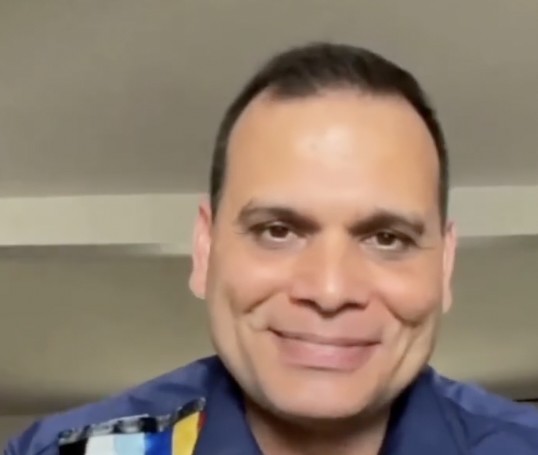 Today, we’re speaking with Ryan Dixon. Ryan is an enrolled member of the Oglala Lakota Tribe from Pine Ridge in South Dakota and has spent over two decades immersed in the Lower Sioux community in southern Minnesota. He trained under First Language Dakota speakers, and he now teaches Dakota. An educator and Indigenous language activist, he co-founded a Dakota Immersion Head Start programming and works to keep the language alive for future generations.
 - Michael Kurtz: Tales of a Wildlife Photographer
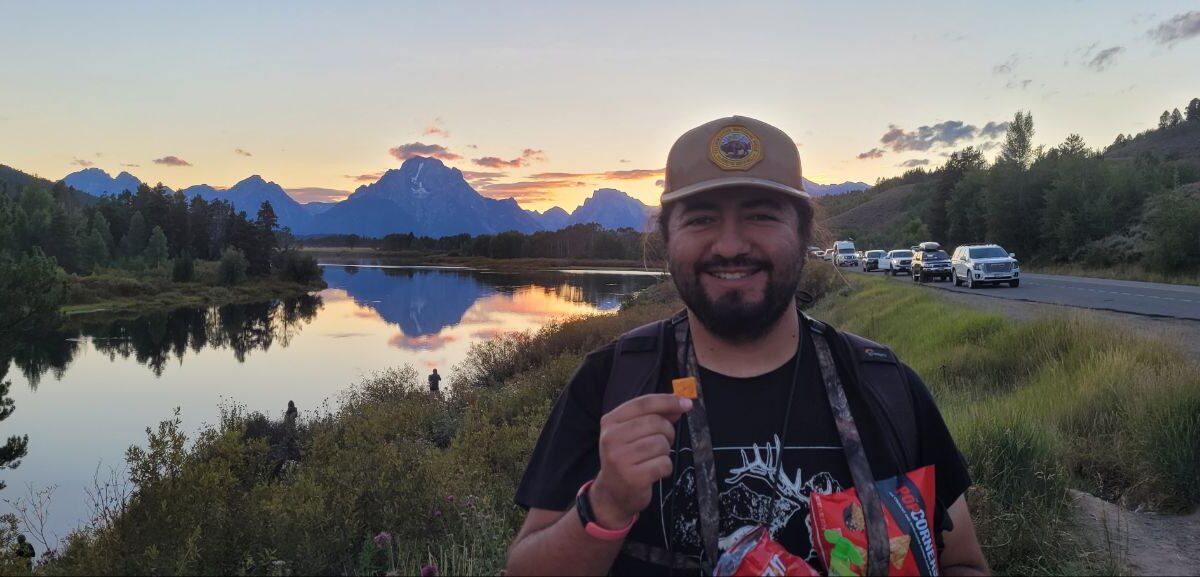 Our guest today is a photographer who takes some stunning photos of wildlife. We’re very excited to speak with Michael Kurtz (Tasunka Opi). He’s Sicangu Lakota, enrolled in the Lower Brule Sioux Tribe. He runs Lakota Photography, blending wildlife photography, tracking, and cultural education. He’s also a naturalist and has volunteered with groups like the National Park Service and Project Coyote. He has spent countless hours across the Dakotas, Minnesota, and beyond, capturing wildlife in its natural habitat. Currently, he’s supervisor of programming and interpretation with Hoċokata Ṫi Cultural Center at the Shakopee Mdewakanton Sioux community.
 MNN Extended Interview: Ashley Cornforth