

On this episode, we speak with contemporary artist and White Earth Nation citizen Kent Estey. Kent paints at his home studio in Naytahwaush, in the heart of the White Earth Reservation. He’s known for really bold abstract landscapes, acrylic, oil, ink, and metal. He’s also an author. In 2025, he released the children’s book Picking Sweetgrass. His latest exhibit, “Mino-Bimaadiziwin: The Good Life” runs through Labor Day weekend in Detroit Lakes: https://project412mn.org/Estey-The-Good-Life-Art/.
Kent shares why he believes his community is the best place to live and to make his work, and how he’s turned his rural studio into a hub of his art merchandizing. Kent tells us how his success is due in large part to Becky, his wife and partner in the business.
Kent’s grandmother was a nationally recognized black ash basket maker. Before she was a well-known artist, she was an Ojibwe girl from White Earth who’d been stripped of her culture and language by boarding schools. She never again spoke Ojibwe with her family. But, she made traditional black ash baskets the rest of her life. Kent explains how those baskets became her language and how he’s kept her legacy alive in his own creations. When Kent started out, he got a great piece of advice: Don’t settle on being a starving artist. If you’re starving, you’re not doing the right work. Find out what it is and do it.
—–
Hosts / Producers: Leah Lemm, Cole Premo
Editor: Britt Aamodt
Editorial support: Emily Krumberger
Mixing & mastering: Chris Harwood
Native Lights is produced by Minnesota Native News and AMPERS with support from the Minnesota Arts and Cultural Heritage Fund.
—–
For the latest episode drops and updates, follow us on social media.
Never miss a beat. Sign up for our email list to receive news, updates and content releases from AMPERS. ampers.org/about-ampers/staytuned/
This show is made possible by community support. Due to cuts in federal funding, the community radio you love is at risk. Your support is needed now more than ever. Donate now to power the community programs you love: ampers.org/fund
TRANSCRIPT
[Music: Native Lights Theme]
KENT ESTEY: My grandmother would attend three boarding schools. She returned to Naytahwaush. Her land was gone. Her language was gone. What she did do was she make baskets, black ash baskets. Her entire life, she used her artistry to tell her story. What she wanted people to know is that she survived.
LEAH LEMM: Boozhoo, hello, welcome to Native Lights, where Indigenous voices shine. I’m your host Leah Lemm.
COLE PREMO: And I’m your other host Cole Premo. Miigwech for joining us. Native Lights is a podcast and radio show, but it’s a whole lot more than that. At its core, it’s a place for Native folks to tell their stories. Each and every week, we have captivating conversations with great guests from a whole lot of different backgrounds. We’re talking musicians, artists, community leaders, healthcare advocates, educators. I can go on and on. They have a wonderful mixture of passions, and we talk to them about their gifts and how they shared their gifts with the community, and it all centers around the big point of purpose in our lives. And amplifying Native voices is our true mission. And let’s get it going, Leah. How you doing?
LEAH LEMM: I am great. How about you?
COLE PREMO: Oh, I’m doing great. You know, celebrating my wife Mariya’s birthday this week, so I took off a couple days, just which you know you’re technically off work, but not in the way with a kid running around. So not technically running around, crawling around. Yeah, just enjoying it. How about you?
LEAH LEMM: Good. Yeah, and then oh, I also went and saw Tori Amos, and if you know me,
COLE PREMO: Oh no way! How cool is that. You’re obsessed with Tori, but in a healthy way, of course.
LEAH LEMM: I went and saw Tori Amos with a friend, with a couple, and it was a wonderful weekend. I I don’t know, like it doesn’t get much better than that.
COLE PREMO: Nice.
LEAH LEMM: Yeah, I went and saw her in Chicago.
COLE PREMO: Chicago.
LEAH LEMM: Yeah.
COLE PREMO: What other things did you enjoy in Chicago, Shy Town?
LEAH LEMM: Pizza.
COLE PREMO: Of course.
LEAH LEMM: Some shopping.
COLE PREMO: I mean, they’re like the deep dish pie kind of…
LEAH LEMM: We tried. We tried, but and then yeah, some shopping and hanging out, walking around. Yeah, it was a very fast weekend.
COLE PREMO: Very good. Very good. Well, who we got on tap today, Leah?
LEAH LEMM: Yeah. So we have an artist today who’s such a great person. I know I’ve had the pleasure of speaking with him a bunch over the last several years. Kent Estey from the White Earth Nation, like I said, a wonderful artist. He does contemporary work. He’s an author, and he paints at his home studio in the White Earth Reservation in Naytahwaush. And yeah, like I have a couple of his pieces, and I can, I don’t know, when I go to like an art market or something, like I can tell his work from you know I don’t want to say a mile away, but like from a long ways away, and I’m like, oh, I can see Kent Estey over there. He’s known for really bold abstract landscapes, acrylic, oil, ink, metal. I think on one of my pieces here, there’s like a jingle for a jingle dress. So a lot of cool stuff, little 3D. Last year he released a children’s book called Picking Sweetgrass, and his latest exhibit “Mino-Bimaadiziwin: The Good Life” is running right now in Detroit Lakes. So yeah, we’ll talk with him about that and a bunch more. So please welcome Kent Estey. Boozhoo, Kent.
KENT ESTEY: Boozhoo, boozhoo. How are you?
LEAH LEMM: Good. It’s nice to see you.
COLE PREMO: Boozhoo, Kent. Could you please start by introducing yourself and you know letting us know where you’re joining us from?
KENT ESTEY: Well, boozhoo, aaniin, welcome. Hello. My name is Kent Estey. My Anishinaabe name is Bimose Noopiming, which means Walks along in the Woods. I’m an enrolled tribal member of the White Earth Nation, and I live in the big metropolis of Naytahwaush, which is smack dab in the middle of the White Earth Reservation. We’ve got about 500 people here, and lots and lots of rez dogs running around. So, but it’s a beautiful place. It’s my favorite place to be, and you know what? I have really nothing but good things to say about this little community, I feel fortunate to have been born here. I live on the same piece of property that I grew up on. I’ve been here for 66 years-a few years, you know-I went off to college and did things, but I came home. I worked here. Lived here, and now have created an art studio here, smack dab in the middle of the White Earth Reservation.
COLE PREMO: Awesome! We always like to ask, you know, how are you doing? How’s the family doing?
KENT ESTEY: You know, we’re doing good. You know, it’s it’s it’s my wife and I spent 40 years teaching on our reservation. You know, we knew it was going to be a challenge to retire, but all of a sudden we were kind of forced to. I retired a little bit early. My wife Becky said, “What are you going to do with your time? And I said, “Remember, you know, remember that art business that we that we talked about creating when we retire when we were 65. I said, let’s just do that four or five years earlier, and so we began that process. And you know, it’s it’s been so satisfying, has surprised us with its popularity and what we’ve accomplished thus far, and so it’s a it’s an amazing dream that that’s happened, and we feel really fortunate to be able to have done what we’ve done, and and we keep creating and keep build keep building and keep growing for Esti paintings and Kent Esti and Becky Esti. This is a really good time for us. This is an exciting time for us, and an unexpected. It’s unexpected too. You know, each month brings us around a different corner, and and we’re surprised at at what happens.
COLE PREMO: You’re listening to Native Lights, where Indigenous voices shine. Native Lights is produced by Minnesota Native News and AMPERS with support from the Minnesota Arts and Cultural Heritage Fund. Today, we’re speaking with Kent Estey, a contemporary Anishinaabe multimedia artist and author from White Earth Nation.
LEAH LEMM: Is there anything that you are currently concentrating on or thinking about these days?
KENT ESTEY: Okay, now you opened up a real big can of worms here.
LEAH LEMM: Good. We’ll start with the can of worms.
KENT ESTEY: So you know we have more projects right now than I’ve had to turn down a few, and and that’s probably a good thing, you know. It’s a good thing, and so we run a full-time art business. And not only do I paint, and I have paintings in my studio, but we decided to also create merchandise of my artwork. Right now, we’re probably producing 90% of the merchandise we sell. We’re doing it right here in Naytahwaush. We’re not ordering it from China, or you know, and then reselling it. We’re making it right here. You know, I come from a technology background, so the technology part didn’t scare me. Our little production studio, and in here I have seven printers and a computer, and most of the time they’re working and printing, and so we create our own merchandise right here.
LEAH LEMM: What are some of those items, Kent?
KENT ESTEY: We found that you know you can sell you can sell an original painting once, but if you get a really good quality scan of your work, a digital copy of that, then you can take that that painting, that piece, and you can sell it a thousand more times. What we do is we are able to print my work on canvas and on aluminum. So we do aluminum prints of my work. We create our own cards right here, our five by seven cards, and we sell you know all of my paintings on cards and in packages, tumblers and mugs and paper prints, metal prints, coasters. We do magnets. We keep adding. We keep adding to that, so you can purchase an original. Thank you, thank you, thanks to everyone that does that. But you can purchase a really nice reproduction of my work, and we do it right here so that we can keep the costs down. Or you can wear an Estey painting because we produce my work on scarves. So the idea is that when you come to my booth or our studio, maybe you cannot afford maybe that great big $5,000 original piece of artwork, but maybe you could buy that piece on a $500 beautiful reproduction of it. So people can stop at our studio, or they can they can stop at us stop at our booth, and they can spend anywhere from $5 on a magnet or card all the way up to $500 plus. If they like my work, hopefully they’ll find something that they’ll take home, and it’s a nice way to get your artwork out there. There’s so many ways to, you know, to get your work out there in the general public. I sure would have never guessed that Peggy Flanagan would be wearing one of my scarves in one of a photo that was taken a few years ago when she stopped at my exhibit. Those are unexpected things, and it makes you feel so proud and appreciated. It’s a good time for artists to do those types of things, to go beyond just painting originals, the technology part didn’t scare me. So we jumped right in.
COLE PREMO: I’m curious about the scanning process for the original paintings. How does that, how does that go?
KENT ESTEY: Well, we used to use a company in in Duluth. They are no longer there, so our work sometimes has to travel to Minneapolis to get a good scan. We’ve also invested in a really good quality camera and lighting, so we can take really nice photographs of my work, you know the cell phones are wonderful and great, and they take amazing pictures. But may not be you may not get the quality for reproductions from them, but if we can take my originals someplace and get them scanned, we prefer that.
COLE PREMO: I see that you’re on Instagram and other platforms. Was that a skill that came naturally to you? Is that something you had to teach yourself?
KENT ESTEY: You know, I, I like I said, I wasn’t afraid of technology. You know, I, I taught technology for 40 years. I brought the first Macintosh computer on the White Earth Reservation back in 1986. I started working with Macintosh computers when I was doing underwriting at WOJB in Hayward, Wisconsin, and we bought one of the first Macintosh computers to design our own programming guide. And when I left Hayward and I moved back home, I couldn’t live without this computer, and so I started kind of my own little desktop publishing company at home. I went to the bank and I borrowed $3,500 from the bank. And the banker said, “What do you do? What’s all this money for?” And I said, “It’s a computer.” And he goes, “What’s that?” He said, “Okay, I’ll trust you.” And so I told him what I wanted to do, and and so I started, you know, doing a little newspaper and designing ads and doing all of that. And then I brought that technology when I started working with the school, I brought that technology to our school district, and it changed the whole direction of our school. They went from Apple II e-computers and the green screens to all of a sudden we had 150 Macintosh computers in the building. It changed the way kids learned, teachers taught, data keeping, and then I went out on my own, and I’m and worked with other schools to bring technology into the schools. At the you know in the early that those early 80s, I mean I was out there, you know, talking about the positivity of computers before the internet was around. By the time I was done with COVID and through all of that mess, the last thing I wanted to look at was a screen, or the last thing I would encourage children to look at is a screen, and so I moved from that philosophy of always bringing technology to the forefront to saying let’s paint, you know, let’s do something different besides look at screens. But it’s a valuable tool, you know. It’s the way I present my, you know, my website. It’s how I connect with people. But everything in moderation, right? It’s a big part of what we do, and you have to feed it. You have to feed it these days, and have that discipline to update your website. And people will create a website, and then they won’t. Nothing changes on it for you know three years. And people find me from all over all over United States through my website and social media, and people are saying you know hello to my wife and I when we’re out and about, and we have no clue who they are because you know we got all these followers, and they and I’m sure they like would like to think yes, I know exactly who they are, but a lot of times I don’t. You know, I don’t know everybody.
LEAH LEMM: So is it you and Becky then doing your social media updates, or is it mostly you or…?
KENT ESTEY: Mostly me. Here’s my wife. My wife is wonderful. She’s a big part of what we do in this business. She’s behind the scenes. She lets me jump out front and do things like podcasts and things like this, and paint. But behind the scenes is all this merchandise that she’s creating. I mean, I said, Becky, what are you doing today? “I’m making 150 magnets and 200 sets of coasters.” And doing all of that. And then I sit at the computer and I said, I think we’re gonna add another printer to our list. And she’s just like “Oh no! What are we making now? What am I learning new now?” It takes, with what we do, it takes both of us. Now we’re providing museums and galleries with my merchandise as well.
LEAH LEMM: Like gift shops.
KENT ESTEY: Yeah, they’re they’re wholesaling, so we provide wholesale product. So right now, the city of Detroit Lakes has kind of taken on me, and I mean pretty much the whole city. It’s hard for me to comprehend that that would ever happen. It started out as just showcasing my work in the museum and gallery there with originals. From there, it turned to let’s put your work in the mall, and let’s print your work on great big panels. So as people are walking through the mall, they see 20 of your pieces throughout the mall, and then tell your story about each piece. And then the next thing they’re saying, let’s put you in Ortenstone Park, let’s put you in our outdoor park, and let’s create your work on these big, beautiful outdoor panels. And as people walk the trails of Ortenstone Park to visit the trolls and the sculptures and all this beautiful artwork that they have there, they can see my artwork and read my story and read about my artwork, and that work will be up there for about a year.
LEAH LEMM: Is this the Mino-Bimaadiziwin exhibit?
KENT ESTEY: Yes. Okay. Yes, that was a surprise. I believe this to be true, that I’m the first Anishinaabe artist to be featured this way in the city of Detroit Lakes, and but you know what, Detroit Lakes, they said, let’s celebrate your work and tell your, don’t be afraid to tell your story. So as you, as you see my work, you’re also gonna know that I’m Anishinaabe and I’m a member of the White Earth Nation, and that’s what’s really important. That’s so important for me to share that and to represent my my nation that way in this way and in a big way. It’s an honor, and I didn’t expect that. You don’t expect that when you live in a little town like Naytahwaush and in the heart of the reservation. You live in this little town, and you think, “Am I invisible?” I remember those years, those days where I’d say I’m here, I’m here, I really am here. It’s just that no one is seeing my work, or the only news you hear about Naytahwaush is bad news, another tragedy, another car accident, another drug overdose. That’s all you hear. And so when Becky and I decided we were going to jump into this, I said, “You know what we’re going to do? We’re going to tell a good story any opportunity we can. We’re going to talk about the beauty of this place, the beauty of the community and the children that we lived in and taught our entire lives, and the beautiful artistry that you may not have seen it yet, but it’s coming. We want you to know that our 40, 50, 60 artists in this community that people just haven’t been introduced to yet.” And so a part of my job is, as I get recognized, is to is to bring others up along with us. We’re gonna take on some passengers. You know, it’s important for me to have you meet some of these people from this community who have never been had a place to showcase their work, and yet they’ve been creating for 40, 50, 60, years some of them. And so we’ve had the opportunity over the last two or three years to curate, and I say we all the time because I’m talking about my wife. I can’t speak. I can’t speak about me. It’s always we. So you know, we do this together. We build this together. Good things are happening, and we’ve got a good story to tell about our community and our people. I want them to know that I grew up amongst all these beautiful creators, and you’re still making things today that just will knock your socks off. It’s just that you’ve never seen them yet because we don’t have a formal place to showcase our work. We don’t have a cultural center. I hope I know that I’m opening some doors for other artists for my community. That’s exciting for me. That’s just as exciting as me and the next thing that we’re doing. Just to bring along others and celebrate others is so important because I know what it feels like to feel invisible. Really do. Times are changing and good things are happening.
LEAH LEMM: You’re listening to Native Lights, where Indigenous voices shine. Native Lights is produced by Minnesota Native News and AMPERS, with support from the Minnesota Arts and Cultural Heritage Fund. Today we’re speaking with Kent Estey, contemporary Anishinaabe multimedia artist and author from the White Earth Nation.
COLE PREMO: Speaking about good stories, you just released, last year, Picking Sweetgrass.
KENT ESTEY: I think the reason I paint and the reason I have been recognized the way that I’ve been recognized in just a small way in certain areas, is because I needed to tell this story. This is my grandmother’s story, Josephine Warren Robinson. We were one of the first families on the White Earth Reservation to reside on the New White Earth Reservation, and my grandmother, she was only speaking Ojibwe. She would attend three boarding schools. Those were not schools; those were institutions of assimilation. So she returned to Naytahwaush. Her land was gone. Her language was gone. Her culture and traditions were gone, and she never spoke Ojibwe to her family. What she did do was she made baskets, and she made black ash baskets her entire life. She returned to that skill at artistry. She taught my father. He taught me and my brothers how to make baskets. I always tell people. I said, you know, my grandmother was beat. She was slapped and kicked because she couldn’t speak English, and she was beat because she was speaking Ojibwe. And by the time she returned, she wasn’t speaking her language anymore. She wouldn’t speak it in front of her children. I said, but you know what? In the end, my grandmother won. She wins in the end. The story ends good because what she did, she used her artistry to tell her story. She was known for a while as one of the last of the black ash basket makers, and so Minneapolis Star and Tribune would come and interview her, the Voyager magazine, the Smithsonian magazine. You know, they would come and interview her to learn about how she created these beautiful baskets, and then they would hear her story of what life was like on the White Earth Reservation before boarding schools, and then also what she went through. She wasn’t bitter in her storytelling. What she wanted people to know is that she survived. She survived, and she created this beautiful artwork her entire life. And in the end, when she was in her seventies, presidents would be holding her baskets, senators would be holding her baskets, and she’d have work in the Smithsonian. So I say, you know what? In the end, she won, and she used that artistry to tell her story. That was her vehicle to tell her story, and I think you know that’s why I paint today, so I can tell her story, because it’s an important story of trauma, historical trauma, but it’s also this important story of resiliency.
LEAH LEMM: If you had advice to give other artists who want to share their work and maybe follow in your footsteps a little bit, or are inspired by you, what sort of advice would you give them?
KENT ESTEY: Follow through. Follow through with all your promises. You know what? It takes a lot of people talking about Kent Esty and Esti paintings to do what we do today. It takes a lot of people. It takes arts organizations. It takes podcasters. It takes media people. It takes museums and galleries, grants organizations, individuals, families, tribal leaders-all these people talking about you to build a business. And you know what? You don’t have to be a starving artist. I was told once, don’t settle for being a starving artist. You’re probably just not doing the right things. If you’re starving, you’re probably not doing the right thing. So find out what that is that you’re not doing right and do it. You know, reach out, jump out of your comfort zone and follow through. All those people that have come across in my life that I’ve made a commitment to, and they’ve helped me along the way. I need to follow through by keeping appointments and showing up and not canceling and working. You know, keep working. So my big thing is, get out there. Don’t be afraid. Follow through, and what you promise, keep that promise.
[Music: Native Lights Theme]
LEAH LEMM: Wonderful, Kent Estey, Ojibwe artist and author, enrolled at the White Earth Nation. Always a great conversation with him. Yeah, I have two pieces of his in my office here. They’re tree trunks. I think there’s like some gold leaf on it too.
COLE PREMO: Just speaking with him, you feel good. So you know, so passionate about what he does. So giga-waabamin to Kent.
LEAH LEMM: Yeah, miigwech Kent Estey.
COLE PREMO: I’m Cole Premo.
LEAH LEMM: And I’m Leah Lemm. Miigwech for listening. Giga-waabamin.
COLE PREMO: Giga-waabamin.
LEAH LEMM:You’re listening to Native Lights, where Indigenous voices shine. Native Lights is produced by Minnesota Native News and AMPERS with support from the Minnesota Arts and Cultural Heritage Fund.
Subscribe to Native Lights wherever you get your podcasts


More from Native Lights
- Michael Kurtz: Tales of a Wildlife Photographer
 Our guest today is a photographer who takes some stunning photos of wildlife. We’re very excited to speak with Michael Kurtz (Tasunka Opi). He’s Sicangu Lakota, enrolled in the Lower Brule Sioux Tribe. He runs Lakota Photography, blending wildlife photography, tracking, and cultural education. He’s also a naturalist and has volunteered with groups like the National Park Service and Project Coyote. He has spent countless hours across the Dakotas, Minnesota, and beyond, capturing wildlife in its natural habitat. Currently, he’s supervisor of programming and interpretation with Hoċokata Ṫi Cultural Center at the Shakopee Mdewakanton Sioux community.
 - Kent Estey: The Art of Survival
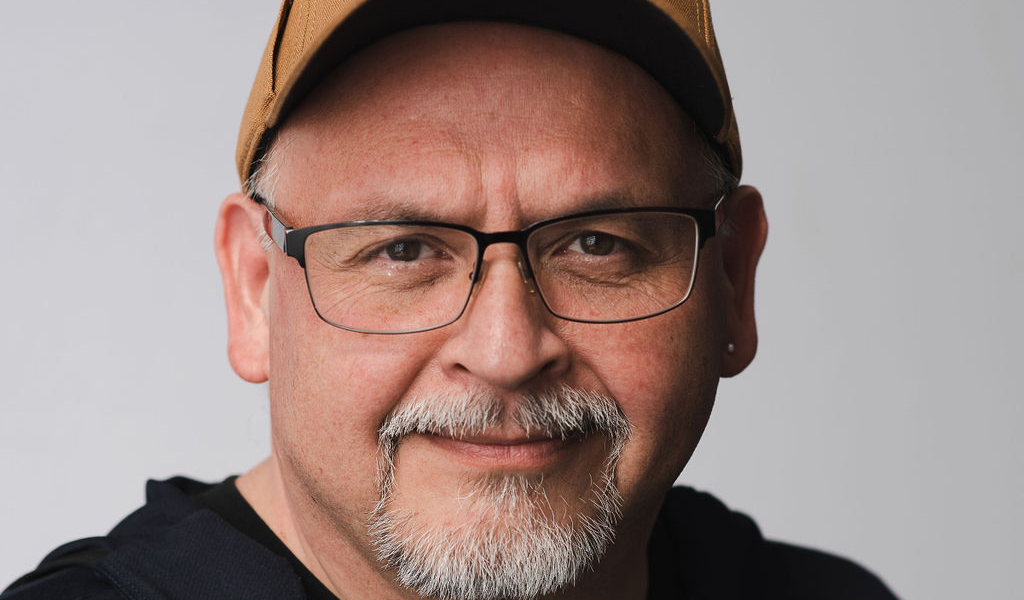 On this episode, we speak with contemporary artist and White Earth Nation citizen Kent Estey. Kent paints at his home studio in Naytahwaush, in the heart of the White Earth Reservation. He’s known for really bold abstract landscapes, acrylic, oil, ink, and metal. He’s also an author. In 2025, he released the children’s book Picking Sweetgrass. His latest exhibit, “Mino-Bimaadiziwin: The Good Life” runs through Labor Day weekend in Detroit Lakes.
 - Rafael Gonzalez, aka, Tufawon: How a Minneapolis Rap Artist Learned How to Sing and Make a Difference
 We are very excited to speak with Rafael Gonzalez, aka, Tufawon. He is a Mdewakanton Dakota and Boricua (Puerto Rican). He’s a rapper, singer-songwriter, and producer who calls South Minneapolis home. In addition to his music making, he’s an educator. He teaches youth music production, songwriting, and recording through his music production program “.WAVWARRIOR”.
 MNN Extended Interview: Senator Mary Kunesh on Legal Protection for Wild Rice