
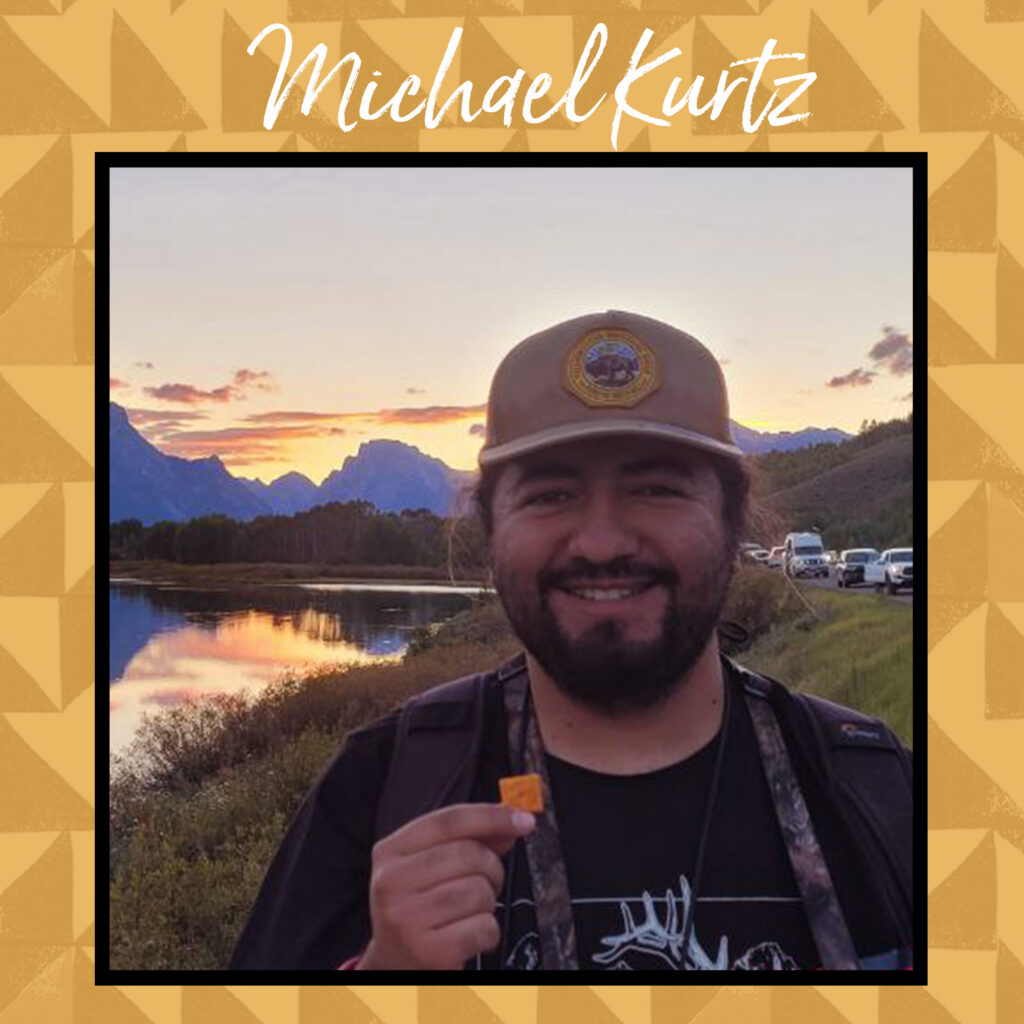
Our guest today is a photographer who takes some stunning photos of wildlife. We’re very excited to speak with Michael Kurtz (Tasunka Opi). He’s Sicangu Lakota, enrolled in the Lower Brule Sioux Tribe. He runs Lakota Photography, blending wildlife photography, tracking, and cultural education. He’s also a naturalist and has volunteered with groups like the National Park Service and Project Coyote. He has spent countless hours across the Dakotas, Minnesota, and beyond, capturing wildlife in its natural habitat. Currently, he’s supervisor of programming and interpretation with Hoċokata Ṫi Cultural Center at the Shakopee Mdewakanton Sioux community.
Michael’s first camera was a Fisher Price kid’s model, which he used to photograph toy dinosaurs. That early interest, paired with a love of the natural world, laid out his life’s path as a wildlife photographer and naturalist.
He gives us his photography tips, weighs in on camouflage and scenting, reveals the once-in-a-lifetime wildlife shot he still can’t believe he got and explains why he’s putting off photographing a wolverine till retirement. He also talks birding and attempts his favorite birdcall.
—–
Hosts / Producers: Leah Lemm, Cole Premo
Editor: Britt Aamodt
Editorial support: Emily Krumberger
Mixing & mastering: Chris Harwood
Native Lights is produced by Minnesota Native News and AMPERS with support from the Minnesota Arts and Cultural Heritage Fund.
—–
For the latest episode drops and updates, follow us on social media.
Never miss a beat. Sign up for our email list to receive news, updates and content releases from AMPERS. ampers.org/about-ampers/staytuned/
This show is made possible by community support. Due to cuts in federal funding, the community radio you love is at risk. Your support is needed now more than ever. Donate now to power the community programs you love: ampers.org/fund
TRANSCRIPT
[Music: Native Lights Theme]
MICHAEL KURTZ: I was driving down the road and I saw it come across the road and get my black cubs out and I try to get a photo. Wow! And I think it’s a lynx. It was hunting the roadside ditch and it’s hopping and it’s diving around and it starts coming towards me and it’s hunting. I was five feet or less from this lynx. I got this full facial shot of it. It was truly like once in a lifetime. It was something I’ll never forget.
LEAH LEMM: Boozhoo, hello, welcome to Native Lights, where Indigenous voices shine. I’m your host Leah Lemm.
COLE PREMO: And I’m your other host Cole Premo. Miigwech for joining us today. Native Lights is a podcast and radio show, but it’s more than that. It’s a place for Native folks to tell their stories. Each and every week, we have captivating conversations with great guests from a whole lot of different backgrounds. We’re talking language warriors, community leaders, healthcare advocates-you name it. They have a wonderful mixture of passions, and we talk to them about their gifts and how they share those gifts with their community. And it all centers around the big point of purpose in our lives and in amplifying native voices. Leah, how you doing?
LEAH LEMM: I’m doing great. How about you?
COLE PREMO: Just chilling, you know, enjoying life.
LEAH LEMM: Excellent.
COLE PREMO: Yeah, you know, it’s great. I always struggle not to bring up the weather, so maybe I just won’t even think about it.
LEAH LEMM: Oh, that’s right. You don’t want to do your weather report for Native Lights here.
COLE PREMO: You know.
LEAH LEMM: Well, regardless of the weather, it’s beautiful outside.
COLE PREMO: It is, you know, it is. There was a mighty rain last night, and it didn’t leak through the roof, so that’s always good.
LEAH LEMM: That’s great. I was trying to give us a way to like not mention the weather, but just like keep it like evergreen. Yeah, it totally rained. Is there a way that you like to enjoy the outdoors?
COLE PREMO: Great question, Leah. Usually we would, Mariya, my wife, and I-we would go out on canoe and enjoy, you know, a nice float. We’ve been out of the game for a while, with her being pregnant and then, you know, having the child. And but we were able to recently get back on the canoe, and that was fun. So hope to, when he’s ready, have Artem join us one of these times. But I’m a little paranoid, and I just we’ll give him a little bit more time, maybe next summer. How about you?
LEAH LEMM: Put like four or five life jackets on him and be all right.
COLE PREMO: Yeah, exactly. Just covered.
LEAH LEMM: No, good, good, good. Let’s see. I mean, with the seasons changing and things like that, I just get really like nostalgic and just like to go on long thinking walks, you know, and just think,
COLE PREMO: Just think.
LEAH LEMM: You know, just think.
COLE PREMO: Don’t you think enough already? Come on now, quit thinking so much, Leah.
LEAH LEMM: I know more doing, less thinking.
COLE PREMO: Do you ever, do you bring—I know you’ve recently got into photography. Do you bring that along on walks ever?
LEAH LEMM: Sometimes I’ll bring it along, or you know it’s always the thing that pops up is like I’ll be driving right. Like last night I was driving and I saw the most amazing sunset. It was like before the storm came in. It must have been, and I was like, “Wow, it would be really cool if I had a camera on me, or like if I had my camera in the back seat.” I am just not used to it. Like I have a nice camera here that I got, you know, a bunch of recommendations from the pros, and I just don’t remember to bring it. I was gonna bring it with me when I took a trip to Boston recently, and I just completely-it’s not a habit yet. That’s the thing, and it would have been amazing.
COLE PREMO: I bet it would be.
LEAH LEMM: I did one of my favorite things in Boston, and that was go whale watching.
COLE PREMO: Oh yes.
LEAH LEMM: And I tell you, I got some kind of okay photos on my iPhone, some nice video on my iPhone of the whales, and they’re actually having a lot of fun. Some weather breached the water, you know, when they kind of jump up.
COLE PREMO: Yeah.
LEAH LEMM: It’s very majestic.
COLE PREMO: I bet.
LEAH LEMM: I have memories in my brain, but not really any good photos.
COLE PREMO: That’s a great segue to our guest today.
LEAH LEMM: I’m going to give you the eyes, Cole.
COLE PREMO: Great segue.
LEAH LEMM: Thank you.
COLE PREMO: Our guest today happens to be a photographer who takes some stunning photos of wildlife. We’re very excited to speak with Michael Kurtz. He’s Sicangu Lakota, enrolled in the Lower Brule Sioux Tribe. He runs Lakota photography, blending wildlife photography, tracking, and cultural education. He’s also a naturalist. He has volunteered with groups like the National Park Service and Project Coyote, spending countless hours across the Dakotas, Minnesota, and beyond, capturing wildlife in its natural habitat. And here he is. Boozhoo, Michael.
LEAH LEMM: Hi, Michael.
MICHAEL KURT: Hi.
COLE PREMO: Could you please begin by introducing yourself and you know letting us know a little bit about yourself?
MICHAEL KURTZ: Yeah. [Speaks in Lakota/Dakota.] So hello, my relatives. My English name is Michael. My Lakota name is Tasunka Opi. I’m enrolled at the Lower Brule Tribe of South Dakota. I am currently living here in the Twin Cities and the state of Minnesota. So currently supervisor of programming and interpretation. I was previously a cultural interpreter with Hocokata Ti Cultural Center at the Shakopee Mdewakanton Sioux community, but I still consider myself like a naturalist birder, a wildlife photographer. I’m all self-taught in those fields. Never took one class of photography, but picked up a camera and really got into the natural world, or more in depth after college. But ever since a young age, I was out in nature and always connected to the birds, the animals, and the wildlife. And my degree is anthropology, but like I said, I’m a naturalist. I kind of delve into all different parts of of the world.
COLE PREMO: Nice. And since you mentioned it, you know what inspired you to pick up that camera?
MICHAEL KURTZ: I’ve had a camera, like a little, like small Fisher Price camera, since I was a kid. I used to actually take pictures of dinosaurs and set them up, or wildlife in the backyard, birds and rabbits, cottontail rabbits. But I think right after I graduated, there was this moment where I saw I was in a state park in Wisconsin, and this deer, and the sun was coming up, and it was taking a drink of water. It was real beautiful, and I was just in awe. I tried to get a picture with my cell phone, but I was like, “Wow, I got to get a camera. I got to be able to document this.” And ever since then, I’ve been on this journey of taking pictures and studying wildlife and kind of reading into nature, but also being out in nature because there’s a lot of stuff I’ve experienced by just being out with wildlife.
COLE PREMO: Great. We always like to ask as we get started, just how are you doing? How’s the family doing?
MICHAEL KURTZ: Good. I just got a house currently in Burnsville, so just set up the bird feeders this spring, and everything’s going well. I’m getting married too coming this fall.
LEAH LEMM: Congratulations!
MICHAEL KURTZ: Got a little dog, a little Chihuahua miniature pinscher mix. We’re all doing well, so thanks for asking.
COLE PREMO: Yeah, congratulations on that. Yeah, but bird feeders-that was a priority once you got the house?
MICHAEL KURTZ: Yeah, yes, that was probably the first thing I did to the yard was scope out the area where I was gonna set these bird feeders up. And actually, I can view them right now. There’s like a little window, even like close to the ground. It’s like just an inch off the ground where my dog can even look out at the feeders. Right when we were looking at the house. I knew that was the bird feeder spot right away and set them up probably on the first weekend.
LEAH LEMM: You’re listening to Native Lights, where Indigenous voices shine. Native Lights is produced by Minnesota Native News and AMPERS with support from the Minnesota Arts and Cultural Heritage Fund. Today we’re speaking with Michael Kurtz, a Sicangu Lakota wildlife photographer enrolled with the Lower Brule Sioux Tribe. He runs Lakota Photography, where he blends photography, tracking, and cultural education. Let’s talk a little bit more about bird feeders. I got one, one of those that spies on your birds and takes video of them and sends it to your phone. Love it, obsessed. What do you have? What’s your setup?
MICHAEL KURTZ: Yeah, so I got a variety of different feeders. I got I think a couple finch feeders up right now. Top platform feeder, and then like a little fly through platform feeder. A couple other hanging feeders where you can kind of stick peanut butter in them, or a little suet feeders, and then a couple like suet packs as well. So I think I got five right now shepherd hooks. I even got like a mini one that has a little bench like table. It’s like in the shape of a real bench where the birds get to go sit in the seat and then eat the seed. I put like peanuts out there, and that gets a lot of the crows or blackbirds. Mixture of the finch feed, thistle, especially in the winter. Birds will go for that. This feeder, like for jelly and oranges for orioles. Had one in the past at my parents’ house, and I’ve never had an oriole. But you slice up an orange, and it only lasts maybe a week out there before it gets all dried up, but really good for the Orioles and even the house finches. They really like that, and the jelly was going instantly. Like a lot of other birds too, or like even the blackbirds, I think, and catbird were after the jelly.
LEAH LEMM: That’s so fun. I know, like our birds are really picky. We don’t know that much about what to. Them or anything like that, but I know what they don’t like because when we put it out there, it’s like they get they get ticked off if we bring out the wrong bird seed, and they’re like, no, bring us back that other like fruit and nut one or something like that. Yeah, they can be pretty picky. And then, so do you just sit around and like wait behind the drapes? I just imagine you like waiting to take some photos or anything like that.
MICHAEL KURTZ: Yeah, a lot of times in the morning they’re more active, and right here in the room that I’m sitting in, the sun comes from the east, or and it’s facing my back, so I could even go out on my deck and like get a nice photo of like that sun right on the bird, and even with my deck, it almost works as a blind. So I got some nice photos of some sparrows, the oriole, blackbirds. A lot of the chickadees will come in, and nuthatches, woodpeckers. So we have the suet too. The suet. I’ve tried a whole bunch of variety of those ones. Like you said, sometimes birds like it. Sometimes sits there for a while. Eventually they’ll come clean it out. A lot of times in the morning or throughout the day, I’ll take a peek, especially right now in the fall or spring. You get these migrants; these birds are relatives that come from many different places. Some of our two-legged relatives go from South America all the way up to Alaska, so you never really know who’s gonna go in your feeders, and then a couple months ago, probably in middle summer, I got this bird bath, pretty big. So most of the birds were actually drinking in it, and it was kind of deeper, and it would fill up with rain. So I was like, I wonder if any bird will actually get to bathe in there. And probably two weeks ago, I had this red-shouldered hawk. So it’s a little bit smaller than a red-tail hawk, but it’s got the red shoulders. And it was taking a bath in there. This very big hawk was my bird bath that blew my mind. And didn’t have my camera there, but I got a really quick photo on my cell phone from that. But it was pretty cool to see that.
COLE PREMO: So what first got you into birding? Was it part of the photography?
MICHAEL KURTZ: Yeah, I’ve always been into birds, so I got my meadowlark photo behind me. Magpies going with the family to South and North Dakota a lot, back to the homelands. I’m really into mammals as well, so I’ll go after certain mammals, urban wildlife, raccoons, otters, coyotes, foxes here in the Cities. At first, before I was into birding, I didn’t know how many birds there were, or like the great vast number of birds that are all throughout the area. Minnesota is actually one of the top states for birding because we get so many birds that come up into the boreal forest up north. But I started keeping a little checklist, bought a bunch of bird books, and a lot of times early on, I’d take a picture of a bird, I wouldn’t know what it was. Go back and look it up. Slowly over time, I guess I consider myself a birder now. I even lead bird walks, so helping, especially Native people. I’m in the Urban Bird Collective, so I help lead a lot of Native folks that are into birding or trying to get into birding. I like to help kind of share that message with them, just to either learn from our bird relatives or sea birds, just to kind of learn what they’re doing or what species they are or just being out in nature.
COLE PREMO: Great. When you listen to birds, do you automatically like identify them? Is it something that you’re like, oh, that’s a finch?
MICHAEL KURTZ: I probably could be considered a bird nerd, I guess. I really can hear like, oh, that’s a downy woodpecker, or is rose-breasted grosbeak squeaking. Even the hummingbirds that barely make any noise. The chip calls, chip calls are pretty tough, but I’ve gotten pretty good on that common yellowthroat or the sun sparrow, cardinal. Just a little chip I can pick up on that, and that kind of goes in with like the research. I really like reading about the books, but I also did get a couple bird CDs. Put on the bird CD, and just study bird sounds by playing and playing those songs over and over again. I kind of memorized some of the birds.
COLE PREMO: What’s your favorite bird call?
MICHAEL KURTZ: If you look up the white-throated sparrow, it has this nice melody to it, and I think that’s only other bird picture I have on the opposite wall in here currently is a white-throated sparrow. First time I heard that call was in Glacier National Park. I was camping, I was in my tent. I woke up and I was like, “Whoa, what is that beautiful call?” Calling right before sunrise, even perfect melody in my mind. It’s like it reminds me of the mountains, forest, and even up in northern Minnesota. I heard a couple and seen a couple. They breed up in northern Minnesota. It’s just this beautiful call. It’s like kind of goes down like that, but it’s like a real loud call when it’s close. [Imitates bird call.] They got a little white patch on their throat, hence the name white-throated sparrow. But I can’t do justice to that call.
COLE PREMO: I appreciate you trying, though. But let’s get more into your wildlife photography. How do you go about identifying the animal that you like to take a photograph of, and how do you build that?
MICHAEL KURTZ: Over time, I feel like hiking in the woods or being out on a stream looking for mink. I have noticed like their tendencies. When I first started, I couldn’t really predict, and still you can’t really predict where animals are going. They’re in a world of their own. But by being in nature and seeing how they react is really kind of how I pick up on their tendencies and kind of being still, getting in a spot where I want to take a photo, just planting myself and letting them come up to me. For example, mink. I’ve had a couple times I’ve had a mink walk right up to my shoe and even smell my shoe. And I know some people that never seen them ink before. They’re very tough, very nocturnal, very reclusive, solitary. And I’ve photographed a handful of mink, especially a baby family at one point. But another one is this coyote family that I’ve been following. There was a coyote den that I’ve been trying to get on, and just watching the parents, I’ve seen them enough where I still think they’re pretty skittish. They’ll keep their ground because they’re protective of their babies. But they’ve seen me enough where a lot of times I feel like these animals let me into their world, their space, their homelands, and that’s how I’ve captured a lot of different photos of wildlife.
LEAH LEMM: Do you do anything special like camo or scents or anything like that to help maybe attract animals or be less scary to animals?
MICHAEL KURTZ: I haven’t really gotten into the scent like the scentless stuff yet, but probably would need to for something like a wolf. Wolves are pretty tough to find. The camo for sure. Some people say as long as you’re still, it doesn’t matter. I just like to think yes. If I get the camo, it’s going to help me hide from the wildlife. So I got all kinds of different camo, especially different colors. In a couple weeks, I’ll be tracking elk in the Black Hills. I think I’m on my sixth or maybe even seventh year of tracking bulls every fall during the rut season, so I started getting now different colors or different shades of camo. End of September, early October, in different parts of the rut. And every year, the ground is different, or the grasses, the trees are have different types of coloring. So I want to kind of blend in, so I have different camo types where I try to match it up, and this year I might bring all the different camos and just see what’s the best color that matches with the terrain. But I love going after and listening to elk too. That’s another sound. I was listening to those elk bugle in the fall, but another one is winter camo. Like I have a whole suit, the snow pants coveralls, big winter jacket, ear muffs, and the whole Face Gator guard, white camo like stocking cap, white camo like the bomber jackets. Everything is white out, and even my gloves. It was actually really hard to find white gloves. I went to many stores for years. I was looking for good white camo gloves, and they sell out a lot. They don’t make a lot of them for guys in the way. Someone at Dick’s Sporting Goods once told me, like, “Oh, guys, they drop it, they lose all their stuff. So that’s why we don’t make white gloves for guys.” I was like all right, got really hard to find white camo gloves. Kind of funny.
LEAH LEMM: That is funny. Well, you travel Dakotas, Minnesota, and beyond. What have been some special places that you’ve encountered?
MICHAEL KURTZ: Yeah, so of course the Black Hills are homelands of Lakota, Wind Cave, our creation. So I like going back to that Southern Black Hills area. My brother too is currently living in the Northern Hills, so another place I’ve been going is Spearfish Canyon. It’s just a scenic drive, beautiful area all across the Black Hills. I can stay in the Black Hills for two weeks a month, and it’s just never enough to get back home. So Black Hills, the Badlands, Theodore Roosevelt, some of those natural places that are very large, like going to the vast, expansive natural areas, come to love even kind of like grasslands and different areas too on the prairie. But another one here in Minnesota is called the Sax-Zim Bog. I travel there every winter. Most of the time it’s winter, and that’s like a birding and wildlife hotspot. So I think the last four years in a row, I’ve seen bobcats there, photographed successfully. Bobcats, I saw a bobcat pounce and catch a mouse. Actually, this past spring, it was a very early spring. And then even further north, I actually encountered a lynx almost one month ago today. I got really good photos of a lynx, and that lynx too happened to pounce on a mouse. A lot of it’s just traveling, learning the areas. There’s a little luck involved, but I’ve had all these unique experiences, and the lynx is one that I’ll probably will last. Lifetime. I’ll never forget running into that.
COLE PREMO: You’re listening to Native Lights, where Indigenous voices shine. Native Lights is produced by Minnesota Native News and AMPERS with support from the Minnesota Arts and Cultural Heritage Fund. Today we’re speaking with Michael Kurtz, a Sicangu Lakota wildlife photographer enrolled in the Lower Brule Sioux Tribe. He runs Lakota Photography, where he blends photography, tracking, and cultural education. I’m just curious about like the moment you see the lynx.
MICHAEL KURTZ: Yeah, so I was driving along and I’ve seen wolves run across the road, northern Minnesota, or I’ve seen like bobcat, foxes, coyotes. A lot of times they they’re very skittish. They run away. I was driving down the road and I saw it come across the road and it was a little bit bigger than a bobcat, so it was pretty far down the road. And I was like, “Oh man, there’s a wolf down the road.” Get my binoculars out and I try to get a photo. Wow! And I think it’s a lynx. So I drove a little bit closer because it was so far out there. I was like, “I gotta drive closer if I want to get a chance of a good photo.” And I parked the car there, and sure enough, that lynx was like noticed me, but it wasn’t as afraid. And I’ve read sometimes lynx aren’t as skittish. And I was hunting the roadside ditch, and it’s hopping and it’s diving around. So I parked my car, shut it off to get quiet. That starts coming towards me, and it’s hunting. Literally walked right out of the driver’s side by my window, I was five feet or less from this lynx. Got this full facial shot of it, and it was truly like once in a lifetime. Because I know some people live their whole lives and just barely get a glimpse of that lynx. Once I saw that, it was like I knew I had to get myself in position. So that was like the most nerve-wracking part. Was I want to drive closer, but I don’t want to spook it off. Sometimes there’s that roll of the dice, and sometimes I’ve tried to get too close to an animal, and it’s gotten away. But that lynx something happened that day where it came right out to my driver’s side window, and it literally was something I’ll never forget. Like it felt like a dream. Like I got pretty early that morning. Was in the Ely area. This was when the fires were still going. I was gonna go north of Ely, and I actually had to reroute, so I wasn’t planning to be in that exact spot. And it just happened to be right time, right place, and that’s why I kept thinking the whole day is like, is this a dream? Did I actually get those photos? It took some time to sink in to see something like that. So many wildlife experiences that I can’t even explain. A lot of times, these animals either walk by or come up to me. It’s almost like a connection to these animal relatives. I’m hopefully working on a couple books here in the near future, and it’s just I’ve had these so many encounters where my love for wildlife is caught in these moments, caught in these images. You gotta see the photo, like believe the experiences.
LEAH LEMM: How do you stay ready for these moments? Ready to hit that button.
MICHAEL KURTZ: Always gotta have the camera on, camera ready to go. Many battery packs. Got extra camera cards just in case when I’m on my trips to take extra photos. I’ve had 100, probably 1000 photos of them processed. But especially when I’m driving, a lot of times when I’m in these large parks or driving the national forest, I got the camera on my seat and it’s on, ready to go at any second. If I have to roll down that window, take a picture out of the car. Even there’s been a couple times where it’s like by the flash of lightning that fox is gone, or a moose. One time there was this moose running. Me and my friend were up in the bog. We tried to get this bull moose, and it kind of got away from us, when we stopped the car, there was a bunch of grouse on the fence that I missed, and then the snowshoe hare was running right at us. But some of these things, even if I had my camera ready, I want to get a photo. Snowshoe hare came out, and I was talking to my buddy, and I was like, “Wow! Usually, when something like that happens, there’s a predator, like a pine marten, chasing it, or wolf, or something,” and then a fisher popped out on the road, and I got my camera up, and I was ready to go. Seconds within seconds, I got this picture of a fisher, and to this day, that’s really the only fisher picture that I’ve gotten. You got to be ready. You got to be in the moment to catch that.
LEAH LEMM: I hear they’re tough to find, fishers.
MICHAEL KURTZ: Yes, very very tough.
LEAH LEMM: There was one time I was sitting on our deck. I’m up in Grand Rapids. At the time, we had a big black dog, Koda. She’s probably 50 pounds or so, and I heard this rustling in the woods. I was like, “Oh, that must be Koda,” because I could see this like big black furry creature, and I thought it was our dog, but it was a fisher.
MICHAEL KURTZ: Wow.
LEAH LEMM: Just coming through. And then I told my friend, and because I had gotten you know a couple really bad photos of it, my friend was like, “That’s a fisher! You know how rare that is?”
MICHAEL KURTZ: Yeah, yeah.
LEAH LEMM: And I was like, “I do now.”
MICHAEL KURTZ: Yeah.
LEAH LEMM: So it’s always cool to, yeah, just be surprised, and I’m sure you miss a lot of shots too to get the ones you do have.
MICHAEL KURTZ: For sure, yeah. There’s photos that got away.
LEAH LEMM: The photos that got away.
MICHAEL KURTZ: Let it pass if it’s not meant to be. Those animals don’t want their images captured. You kind of kind of pass that up. Yeah, another one of them that comes to mind is I had two badgers in the Black Hills, they’re snarling and kind of fighting, and it happens so quick where I try to get the camera focus on it because the badgers are so small too, short to the ground, and the grass that they live in is sometimes can be taller than them, and they disappear. And these two badgers just like went at it, and probably the one that got away, but it was not meant to happen, not that time, but it was still cool to see two badgers, let alone one badger. One badger is really tough to find. Badger is another one I love to kind of try to find when I’m in the Black Hills because it’s just so elusive just to see one badger, just to see them in the natural habitat. That’s kind of animals that I go after are rare, hard to find ones. I don’t want to encroach on any animal. Don’t want to like ruin any of their habitats. And especially nowadays, with so much fragmentation, the meadowlark here over 90% or more in Minnesota of their habitats have been destroyed just by farming. It’s trying to keep in that mind, especially with these rare wildlife, a lot of times I’m not going to share the kind of locations, or I want to protect as much of the wildlife as possible. Even a little lynx or otter family that are so sensitive, too much disturbance could kind of scare a whole otter family away. I want to make sure all these animals are protected. Working on my book where it’s like I’m out in the field, I’m out taking photos, I’m trying to get my hands involved in everything, being out in the field birding constantly. Probably a long-term goal, I would like to see a mountain lion or cougar. Wolverine is like long, long, long-term. Maybe when I’m in retirement or something, and the mountain lion just seems more graspable. But at the time, with nature, you get out and you strike out a lot. I’m out in the Minnesota River Valley looking for anything-a raccoon, a possum, otter. You know, strike out or not see any mammals even for 10 times in a row. You gotta chase your dreams, do what you love. So sometimes that’s just getting out there. Bed’s nice and toasty but getting out there to experience some of those once-in-a-lifetime moments, it’s like that’s what takes your breath away.
[Music: Native Lights Theme]
LEAH LEMM: Michael Kurtz.
COLE PREMO: That was great. Yeah.
LEAH LEMM: Always be ready. Get out there, get outside.
COLE PREMO: Exactly.
LEAH LEMM: Honestly, I gotta tell myself that. Jeez, Louise.
COLE PREMO: You’re into that too a little bit, the bird feeder.
LEAH LEMM: I hear when you turn 40, you’re supposed to like pick the thing to get into. So I’m just shopping around.
COLE PREMO: There you go. Some jazz, some birding. Chi-miigwech to our guest, Michael Kurtz, Sicangu Lakota wildlife photographer, enrolled in the Lower Brule Sioux Tribe. He runs Lakota Photography, blending photography, tracking, and cultural education. I’m Cole Premo.
LEAH LEMM: And I’m Leah Lemm. Miigwech for listening. Giga-waabamin.
COLE PREMO: Giga-waabamin.
LEAH LEMM:You’re listening to Native Lights, where Indigenous voices shine. Native Lights is produced by Minnesota Native News and AMPERS with support from the Minnesota Arts and Cultural Heritage Fund.
Subscribe to Native Lights wherever you get your podcasts


More from Native Lights
- Alex Kmett: Culture as Curriculum, Language as Medium
 Today, we’re speaking with language revitalization leader and cultural educator Alex Kmett. Alex is a citizen of the Red Lake Nation and a descendant of the Leech Lake Band of Ojibwe. He’s a 2026 Bush Fellow and a co-founder of a charter school in Red Lake Nation.
 - Ryan Dixon: Making Friends with the Dakota Language
 Today, we’re speaking with Ryan Dixon. Ryan is an enrolled member of the Oglala Lakota Tribe from Pine Ridge in South Dakota and has spent over two decades immersed in the Lower Sioux community in southern Minnesota. He trained under First Language Dakota speakers, and he now teaches Dakota. An educator and Indigenous language activist, he co-founded a Dakota Immersion Head Start programming and works to keep the language alive for future generations.
 - Michael Kurtz: Tales of a Wildlife Photographer
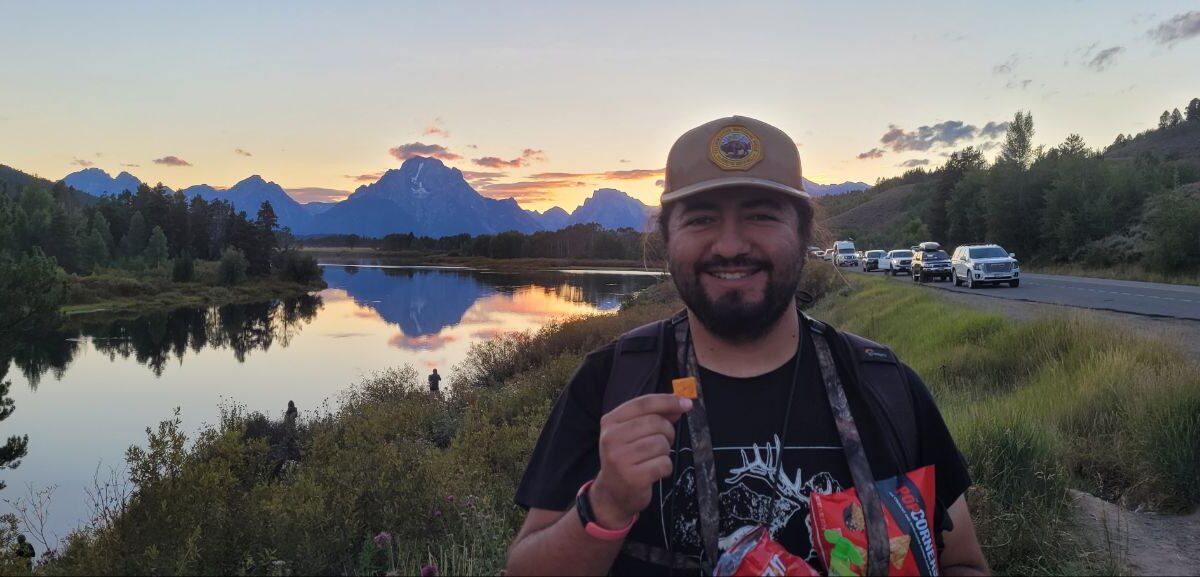 Our guest today is a photographer who takes some stunning photos of wildlife. We’re very excited to speak with Michael Kurtz (Tasunka Opi). He’s Sicangu Lakota, enrolled in the Lower Brule Sioux Tribe. He runs Lakota Photography, blending wildlife photography, tracking, and cultural education. He’s also a naturalist and has volunteered with groups like the National Park Service and Project Coyote. He has spent countless hours across the Dakotas, Minnesota, and beyond, capturing wildlife in its natural habitat. Currently, he’s supervisor of programming and interpretation with Hoċokata Ṫi Cultural Center at the Shakopee Mdewakanton Sioux community.
 MNN Extended Interview: Tom B.K. Goldtooth