


This week, an extended interview with Leanna Goose, an environmental activist from Leech Lake, about her work to protect land, air, and water for the next seven generations.
—-
Producer: Deanna StandingCloud
Editing: Britt Aamodt, Victor Palomino, Emily Krumberger
Anchor: Marie Rock
Mixing & mastering: Chris Harwood
Editorial support: Emily Krumberger
Never miss a beat. Sign up for our email list to receive news, updates and content releases from AMPERS. ampers.org/about-ampers/staytuned/
This show is made possible by community support. Due to cuts in federal funding, the community radio you love is at risk. Your support is needed now more than ever. Donate now to power the community programs you love: ampers.org/fund
TRANSCRIPT
[Music: Minnesota Native News Theme]
Marie Rock [ANCHOR]: You’re listening to Minnesota Native News. I’m Marie Rock.
This week, we listened to an extended interview with Leanna Goose, an environmental activist from Leech Lake, about her work to protect indigenous land, air, and water for the next seven generations. Let’s hear from producer Deanna StandingCloud.
Deanna StandingCloud: If you just want to introduce yourself, what brings you to the Indigenous Farming Conference, how you come to do this work, and the most rewarding, profound experiences you’ve had.
Leanna Goose: Boozhoo, my name is Leanna Goose, and I work within the Rise and Repair Alliance space. I am from Leech Lake. The Rise and Repair Alliance space is an alliance made up of 21 different environmental, faith, and Indigenous organizations working together to advance climate justice and Indigenous rights at the state level.
Deanna StandingCloud: What brought you here?
Leanna Goose: So, a lot of lands and waters within Turtle Island are contaminated, and I’m really wanting to focus in on how humans can help fix that problem, since we are a part of why our lands are contaminated. So, it seems like we can lead the way, and I work on Leech Lake. I work at the state level, too. We’re trying to push for protections for manoomin or wild rice, and this plant is really struggling at a time when my kids are just beginning to get to no wild rice. So, I really want to be able to help, and I want to help make sure it remains for them. So, our existence and manoomin and manoomin are tied together as we both depend on clean water for our survival. I think it’s something that resonates with all Minnesotans is that we all need clean water to survive. When we work to heal the land, like we are working to heal ourselves, in Indigenous culture, we really understand, like, our connection to the land is a big part of who we are. And when we work towards healing the land, we’re working towards healing, healing ourselves. And I think that’s important to note. Like, when we do work towards healing, you know, it’s not just for humans, it’s for all the living beings that we share this earth with. And, I think we all really got to stand together, do what we can to protect the world for the next generations.
Deanna StandingCloud: Is there any last final, like, thoughts or anything that I missed?
Leanna Goose: The work that I want to do is, like, on the community level. The work that I’m doing at the state level, protections for the land, air, and water for the next seven generations. And I think it’s really crucial to note that that work could not be done without the communities involved. And I want people to know, you know, that we are a power. We can be the change that we want to see in the world. And the time that we’re living in requires resistance. Resistance to these different threats that are coming our way. But it also requires revolution. I’m not talking about, like, the revolution where the government is overthrown. I’m talking about, like, the revolution of where we begin to care for the land beneath our feet. And the waters that bring us life. And that’s what this project is about. There are things that we can all do to help in our own ways. And I think it’s really important to recognize that we can all be a part of positive change. So, what can Minnesotans do to support our work? We’re pushing for so many pieces of good legislation, like e-waste recycling, protections for wild rice, climate justice education. And our legislators, you know, they need to hear from us not only about the things that we want to see them do, but also the things that we do not want to see them do. Like, they’re thinking about lifting the nuclear moratorium and providing big tax breaks for data centers. So, there’s a lot going on that we should be paying attention to.
Leanna Goose [speaking at the 2025 Great Lakes Indigenous Farming Conference in Cohasset, MN]: “So, in the land of 10,000 lakes, we can be the change and lead the way. Minnesota is blessed to have a massive amount of freshwater lakes. Minnesota’s waters flow outward. No waters flow in. So, I thought that was a really cool fact. Like, whatever we do here to create change, it will flow outward across Turtle Island. So, I thought that was really beautiful. Minnesota has over 2,000 waters that are listed as impaired waters. So, we really want to weave indigenous wisdom into modern science to help heal the lands and waters.”
Marie Rock: That’s all for this week’s episode. Join us next time for more voices and stories that inform, uplift, and shape our communities, right here on Minnesota Native News. You can find Minnesota Native News on social media! Follow us on Facebook at Minnesota Native News and on Instagram and X at M N Native News.
[Music: Minnesota Native News Theme]
Marie Rock: Minnesota Native News is produced by AMPERS: Diverse Radio for Minnesota’s Communities. Made possibly by funding from the Minnesota Arts and Cultural Heritage Fund and the citizens of Minnesota.
More from Minnesota Native News
- MNN Extended Interview: Matthew RantanenThis week we look back at an interview producer Emma Needham did with Matthew Rantanen, descendant of the Cree Nation, about the work he is doing to bridge the digital divide in tribal lands.
- Day of Remembrance Honoring Boarding School Survivors, and Bowwow Powwow on Stage
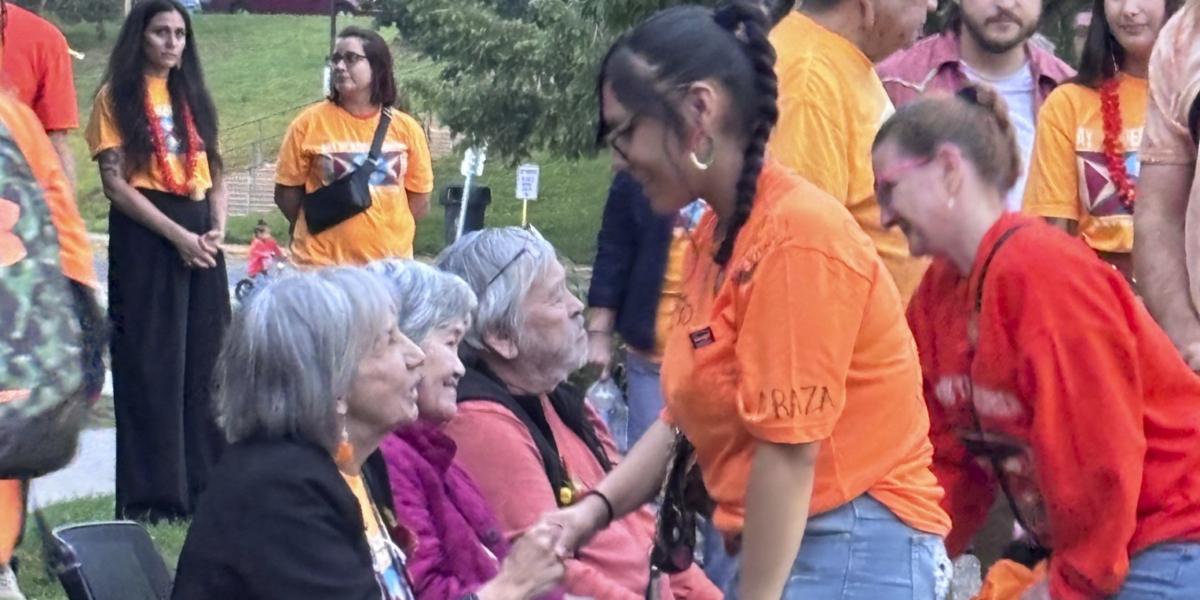 This week, the community gathers to honor boarding school survivors and a popular children’s book debuts as a play.
 - MNN Extended Interview: Bryan Bosto
 This week, we revisit producer Emma Needham’s interview with Bryan Bosto, who was recently inducted into the Minnesota Lacrosse Hall of Fame for the work he has done in growing the game in Native communities.
Subscribe to Minnesota Native News in your favorite podcast app


 Robert Lilligren: the Native community responds to Minneapolis ICE operations