
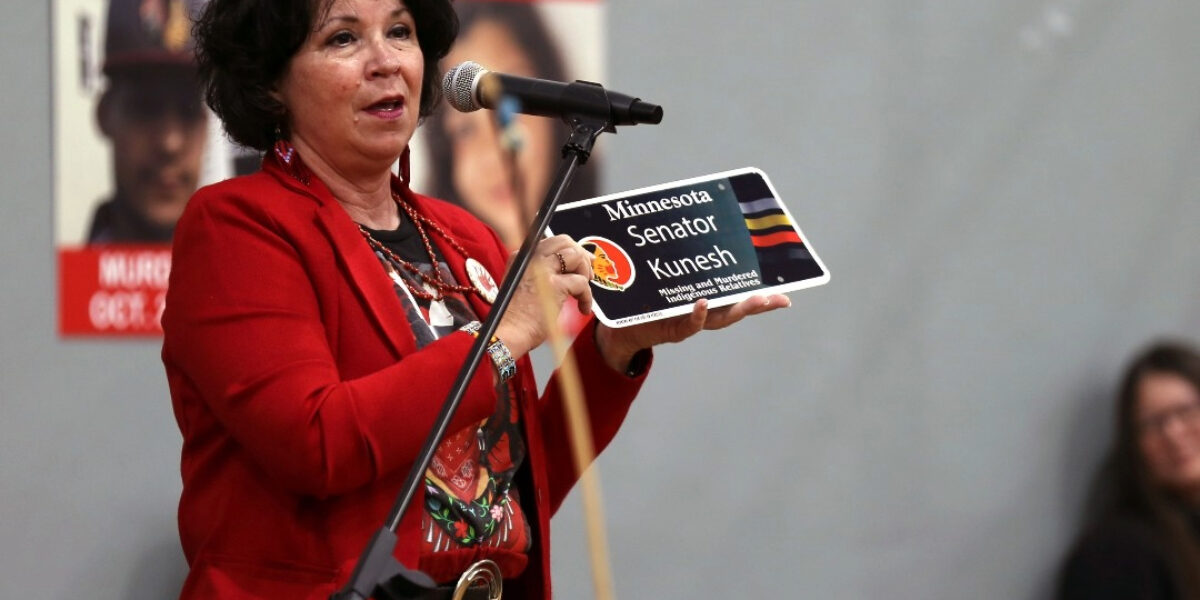
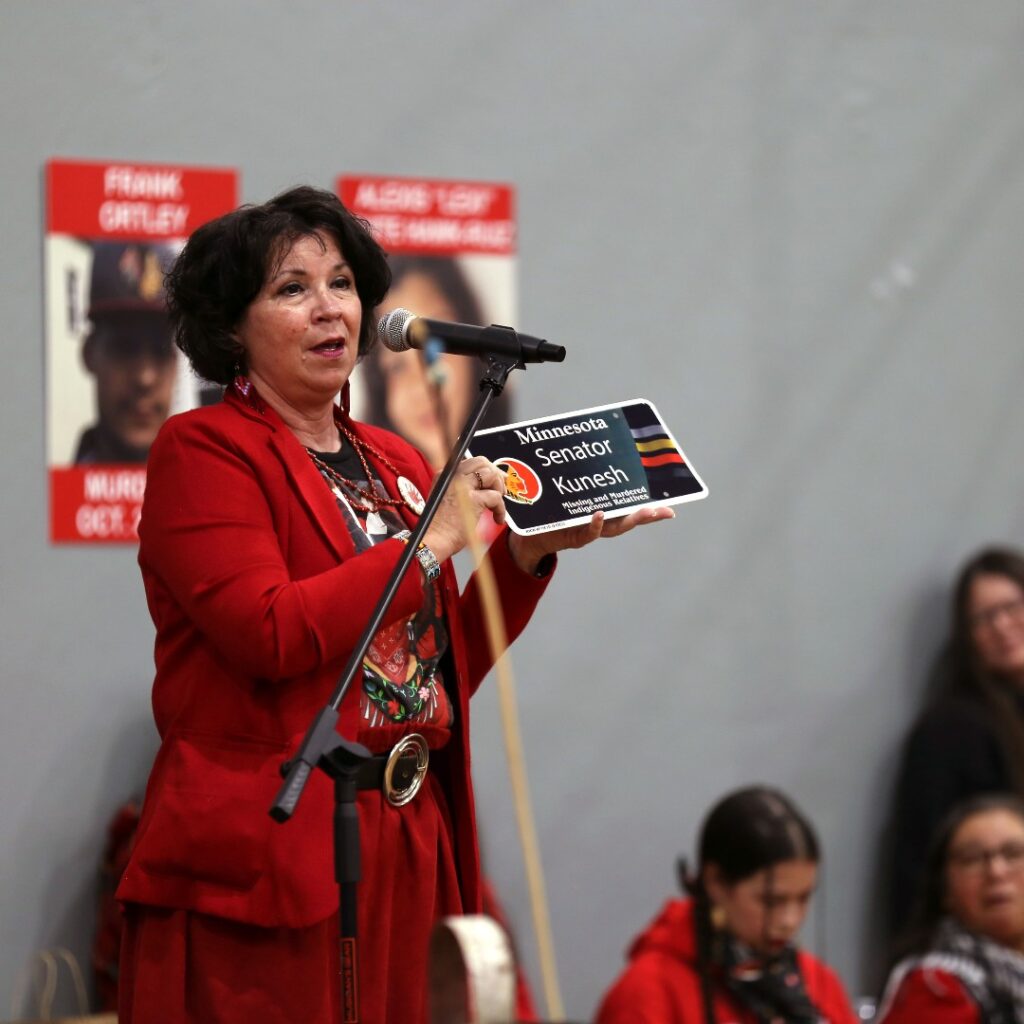
This week on Minnesota Native News: how a new license plate helps Minnesota drivers support the families of Missing and Murdered Indigenous Relatives, and Native people across Minnesota welcome the winter season through cultural and spiritual storytelling.
Intro Music
Host/Marie Rock:
This is Minnesota Native News. I’m Marie Rock. This week, drivers throughout greater Minnesota can make an impact families of Missing and Murdered Indigenous Relatives with the new state MMIR License plates. Here’s Reporter Chandra (CHAN-Druh) Colvin (KUHL-Vin).
Chandra Colvin: In early 2024, the Minnesota Department of Public Safety released a new license plate in collaboration with the Missing and Murdered Indigenous Relatives office. It joins three tribal communities, including the Bois Forte Band of Chippewa, Fond du Lac Band of Lake Superior Chippewa and Grand Portage Band of Lake Superior Chippewa, who also offer Missing and Murdered Indigenous Relatives specialty plates.
Ana Negrete: Indigenous people make up 1.4 percent of the population, but for Indigenous women, they make up 8 percent of the homicide rate in Minnesota.
Chandra Colvin: Ana Negrete ((Neh-greh-tee)) is a member of the Otomi Tribe in New Mexico. She’s a community planner for the Minnesota Missing and Murdered Indigenous Women Task Force.
Car ignition starts.
The new license plate features a red handprint to represent the fight against injustice and the silencing of Indigenous voices, and a ribbon skirt with colors sacred to Indigenous cultures.
Chandra Colvin: When someone purchases the specialty plate for their car It costs $15.50 and requires a minimum $25 annual contribution payment that goes into a reward fund called,
Ana Negrete: Gagigay Mgwindigoziwug which means “they will be remembered forever.”
Chandra Colvin: The funds help support the efforts of finding missing relatives. According to the Missing and Murdered Indigenous Relatives Office, between 2012 and 2020, 27 to 54 American Indian women and girls went missing in Minnesota each month.
Sound of car driving, car turning off.
Ana Negrete: I know that families, when they see the license plate, know that they’re not alone in this, in the search for their relatives, and that know that other folks, it’s just a kind of easy way that for other folks to acknowledge, “hey, we see you, we know about your loved ones, we’re thinking about you too” So I know it uplifts our families.
MMIR Victim Family: “I pray every day that we find answers. We have to bring her home”
Chandra Colvin: The public is encouraged to contact the Missing and Murdered Indigenous Relatives office for any questions or concerns.
For Minnesota Native News, I’m Chandra Colvin.
Announcer/Marie Rock: Next, both Ojibwe and Dakota people across Minnesota, winter is the time for telling stories. Here’s Chandra (CHAN-Druh) Colvin (KUHL-Vin) with more.
Chandra Colvin: Most have heard the stories of Little Red Riding Hood or Jack and the Beanstalk. Storytelling is ingrained in many cultures and societies, often sharing cautionary tales or lessons. For Indigenous people across the United States and here in Minnesota, a strong tradition of storytelling goes back thousands of years.
Hope Flanagan: It’s all about a way of being on the earth– that’s in respect with the earth, and each other, and the plants and the animals…
Chandra Colvin: Hope Flanagan is an Ojibwe storyteller. She works at Dream of Wild Health as their Community Outreach & Culture Teacher.
Hope Flanagan: It’s the story that comes through, and then whoever receives the story, they get the lesson that they need to hear. Even though the stories themselves may seem lighthearted, there’s always profound teachings inside the stories.
Chandra Colvin: In Flanagan’s Ojibwe culture, some stories are not typically told until the winter season. Oftentimes, powerful beings and spirits are the center of those stories.
Sound of someone walking across crunching snow
Hope Flanagan: You don’t want to invoke those spirits to come when they’re not meant to come. It’s not their time. It’s not your choice to decide when they come. They’re a lot more powerful than I’ll ever be that for sure, or humans will ever be.
Chandra Colvin: Flanagan says that stories are alive beyond the spiritualism behind them.
Hope Flanagan: You might be talking about a person, you might be talking about a tree, you
might be talking about any living being, that’s going to change the whole structure of your sentence. Because the way you see the world is in what’s alive and what’s not alive. As a storyteller, I have to feed them.
Chandra Colvin: For Hope, this means carrying herself in a way that doesn’t attract negativity.
Hope Flanagan: So much of the culture is deep in the stories. My responsibility is to make sure that there’s young ones that hear these teachings and learn these things so that they can pass them on to their children, and then they pass them on to their children.
Chandra Colvin: For Minnesota Native News, I’m Chandra Colvin.
Outro Music, Funder Credit
More from Minnesota Native News
- Day of Remembrance Honoring Boarding School Survivors, and Bowwow Powwow on Stage
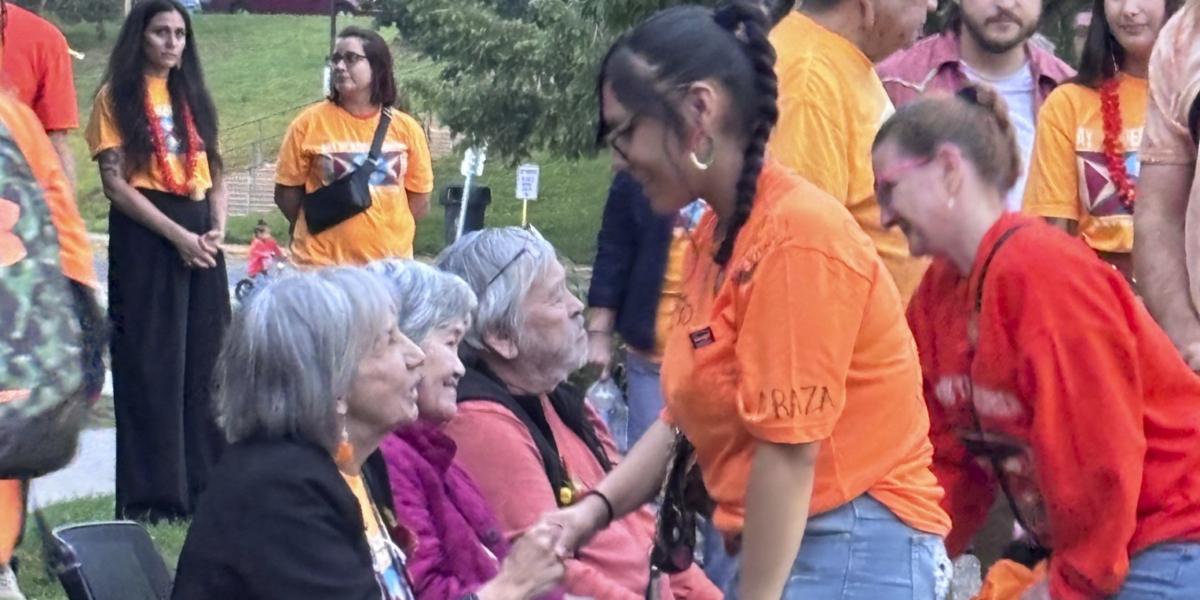 This week, the community gathers to honor boarding school survivors and a popular children’s book debuts as a play.
 - MNN Extended Interview: Bryan Bosto
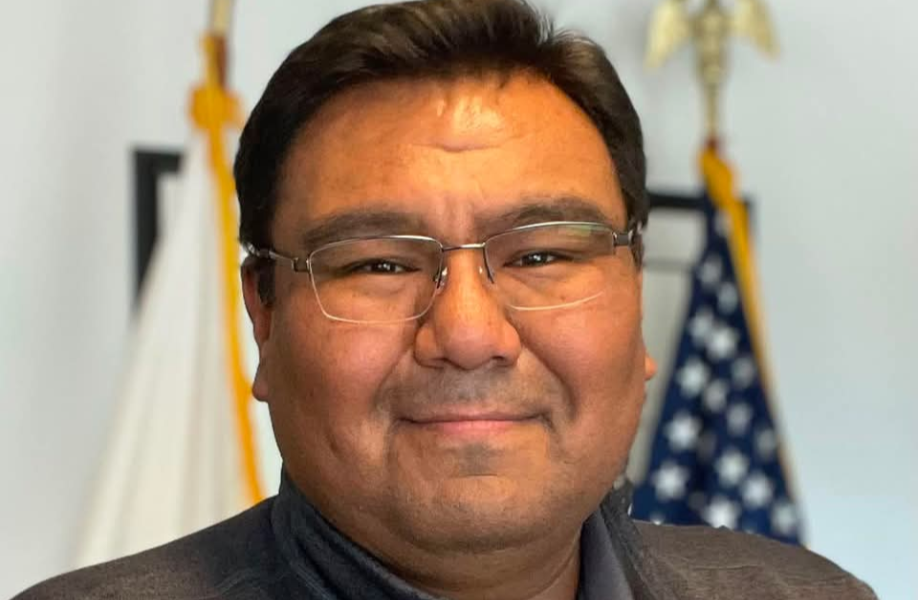 This week, we revisit producer Emma Needham’s interview with Bryan Bosto, who was recently inducted into the Minnesota Lacrosse Hall of Fame for the work he has done in growing the game in Native communities.
 - Dagwaagin Wiikonge’ (Fall Feast) at AICHO, and the New President at Leech Lake Tribal College
 This week, we visit a Fall Feast in Duluth, and we meet the new President of Leech Lake Tribal College.
Subscribe to Minnesota Native News in your favorite podcast app


 Building bridges through story: Ajuawak Kapashesit on playing with genre, the power of story, and making action figure movies as a kid