
This week we look back at an interview producer Emma Needham did with Matthew Rantanen, descendant of the Cree Nation, about the work he is doing to bridge the digital divide in tribal lands.
Image: [Image Credit: ]
Executive Producer: Travis Zimmerman
Producer: Emma Needham
Anchor: Britt Aamodt
Editorial support: Victor Palomino
Mixing & mastering: Chris Harwood
—–
For the latest episode drops and updates, follow us on social media.
Never miss a beat. Sign up for our email list to receive news, updates and content releases from AMPERS. ampers.org/about-ampers/staytuned/
This show is made possible by community support. Due to cuts in federal funding, the community radio you love is at risk. Your support is needed now more than ever. Donate now to power the community programs you love: ampers.org/fund
TRANSCRIPT
[Minnesota Native News theme]
Britt Aamodt: For Minnesota Native News, this is Britt Aamodt. This week we look back at an interview producer Emma Needham did with Matthew Rantanen, descendant of the Cree Nation, about the work he is doing to bridge the digital divide in tribal lands.
Matthew Rantanen: I hold a few roles. I have served on the National Congress of American Indians for the last 12 years as their tech and telecom subcommittee co-chair. I co-founded the Tribal Broadband Boot Camps with Christopher Mitchell from Institute for Local Self-Reliance.
Emma Needham: Why is having access to broadband internet or having access to the outside world important for tribal nations?
Matthew Rantanen: You know, it’s a variety of resources that live on the internet now. Rewinding back to the first time where tribes were basically forced to be on the internet, and that is when the federal government changed its granting program from mail or FedEx or hand deliver to grants.gov, which forced all of the tribal subsidies and all of the tribal grants that were allocated towards the federal responsibility, the trust responsibility between tribes and the federal government. They all were processed through grants.gov.
But you then have layered on top of that education. School now provides your homework online. It doesn’t hand you a paper in the classroom. It says, okay, sign in, get online to the portal. Here’s your homework for the night. It’ll be there when you get home to get it. Kids don’t have access when they get home. They have access when they’re at school. So a lot of these kids on reservations, by the time they get home, they have no access to the thing that they’re supposed to be doing for the next day.
Without connectivity, you can’t do job search. You can’t do job training online. You can’t do some of the things that are required to be able to engage employment, health resources. A lot of those things can be managed in minutes with patient doctor consults over an internet connection. Whereas they may need somebody to come pick them up and drive them to the local clinic, which may be 45 minutes to an hour away to sit in a lobby, to wait for a doctor who’s very probably overbooked to then do an appointment, to then drive all the way back home and they’ve wasted more than half of a day and some resources to be able to do that when if all they could do or all they had to do was flip on an internet connection, make a connection to their telehealth provider and do a five-minute check-in and do a blood pressure cuff or do a sugar monitor or a number of different internet of things that are related to health now where it would be super simple.
Emma Needham: How did the issue of tribal broadband and co-founding this boot camp come about?
Matthew Rantanen: Really, there were a couple things that were the catalyst for this. One was the Federal Communications Commission was making a move in a chunk of spectrum, the 2.5 gigahertz spectrum, and they were realigning that. And In the process, we at the National Congress of American Indians and many other tribal groups together pushed to get what we call a tribal priority window. And that would be an opportunity for the tribe, a tribe, to opt in or apply for that FCC license for their tribal land. The second catalyst was COVID.
Emma Needham: What are some of the challenges that you see come up often in communities or if you have an example of like a particularly unique challenge from one of the cohorts?
Matthew Rantanen: Yeah, I mean, tribes have a lot of individual challenges based on just geography alone. Proximity to the rest of the world’s network is a problem. Already you’re at a deficit. You may be able to get funding to build a nice network locally to serve your tribal homes and your tribal municipalities, but then how do you get to the rest of the world? So there’s that piece. Geography is probably the toughest piece of the puzzle and that is tribes were often, you know, reservations were often set up in places where people did not want to be.
Britt Aamodt: That’s all for this week’s episode. Join us next time. For more voices and stories that inform, uplift, and shape our communities, right here on Minnesota Native News.
[Music: Minnesota Native News Theme]
Britt Aamodt: Minnesota Native News is produced by AMPERS, Minnesota’s community radio stations, made possible by funding from the Minnesota Arts and Cultural Heritage Fund and the citizens of Minnesota.
More from Minnesota Native News
- MNN Extended Interview: Matthew RantanenThis week we look back at an interview producer Emma Needham did with Matthew Rantanen, descendant of the Cree Nation, about the work he is doing to bridge the digital divide in tribal lands.
- Day of Remembrance Honoring Boarding School Survivors, and Bowwow Powwow on Stage
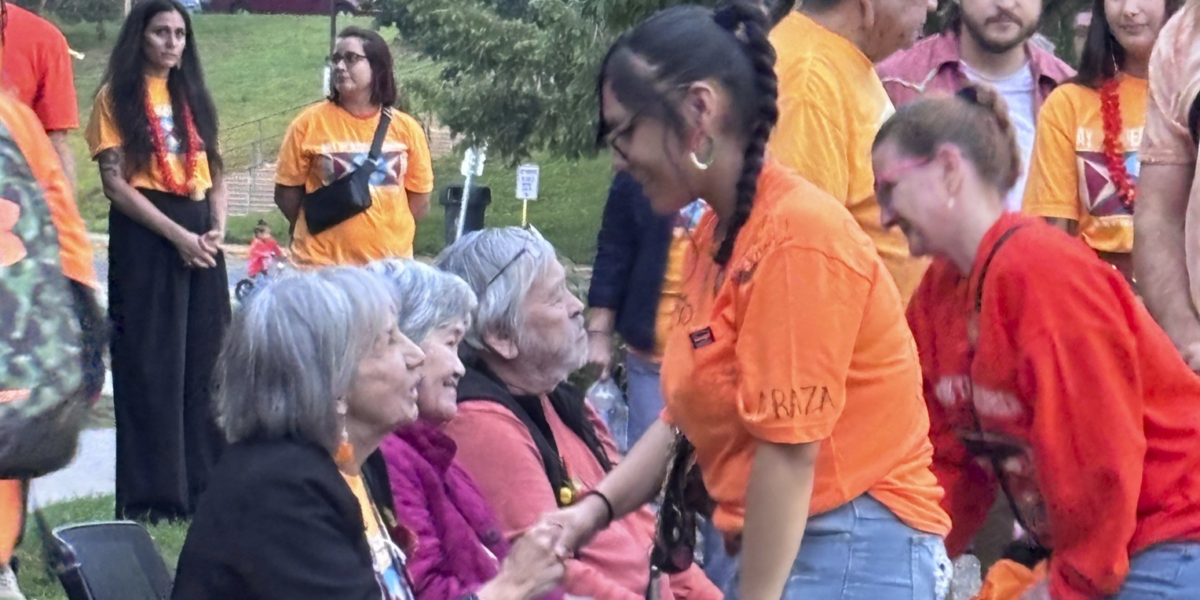 This week, the community gathers to honor boarding school survivors and a popular children’s book debuts as a play.
- MNN Extended Interview: Bryan Bosto
 This week, we revisit producer Emma Needham’s interview with Bryan Bosto, who was recently inducted into the Minnesota Lacrosse Hall of Fame for the work he has done in growing the game in Native communities.
Subscribe to Minnesota Native News in your favorite podcast app


 Day of Remembrance Honoring Boarding School Survivors, and Bowwow Powwow on Stage